Welcome — this is a small archive of the parts of Singapore’s story that don’t usually make it into textbooks or tourist brochures. Forgotten figures, strange footnotes, buildings that vanished, and the odd bit of trivia that changes how you see the island.
New posts appear below as they’re written.

The Padang and the Cricket Club: The Field That Was Ordered to Stay Empty
In the middle of Singapore’s civic district, in front of the old City Hall, lies 4.3 hectares of grass that has never been built on. Armies have camped on it, kings’ birthdays have been saluted across it, a surrender was signed in the chamber above it, and a nation’s first cabinet was sworn in within sight of it — but for two hundred years the field itself has stayed empty, by order. In 2022 the emptiness itself was made a national monument. This is the story of the Padang, and of the two Victorian sports clubs that guard its ends.

Changi Prison, 1936 to 2004: The Gaol Whose Wall and Gate Were Kept
Along Upper Changi Road North stands a fragment of a prison: an entrance gate, 180 metres of high wall and two corner turrets, kept when everything behind them was demolished in 2004. The fragment is a national monument, gazetted in 2016, but it stands inside a restricted area and almost nobody can walk up to it. The gaol it belonged to was, in turn, Singapore’s most modern prison, an internment camp for the colony’s own rulers, the most crowded prisoner-of-war cage in Singapore, the place where Japanese war criminals were hanged, and then the country’s main prison for another half-century. This is the gaol’s own story.

Haw Par Villa: The Tiger Balm Garden of Statues
On a hill above Pasir Panjang Road stands the strangest garden in Singapore: a terraced hillside crowded with painted concrete statues — gods and demons, monkeys and mermaids, sinners being sawn in half — built by the Tiger Balm fortune as part gift, part advertisement and part moral textbook. It has outlived the mansion it was built around, the company town of theme parks that tried to replace it, and the family that made it. Today it waits behind a partial closure while the state decides what to do with it. This is the garden’s own story; the brothers who paid for it, Aw Boon Haw and Aw Boon Par, have their own post on this blog.

1973: The Oil Shock and the Winter Singapore Turned Down the Lights
In the winter of 1973, Singapore’s lights did not go out — and that was not luck. The island had no oil of its own, yet it refined other people’s oil on a world scale and burned imported oil for every unit of its electricity. When the Arab oil producers cut production and the price of crude quadrupled in three months, Singapore’s response was a strange one: it refused to help itself to the oil sitting in its own tanks, taxed its own motorists hard, and asked everyone to save a litre a day. The lights were turned down deliberately, by policy — and only just a little.

St James Power Station: The Coal-Fired Station of 1926
Ask a Singaporean about St James Power Station and you will likely hear about a nightclub, or about Dyson. Both answers are right, and both skip the point. The red-brick building at HarbourFront began as a coal-fired power station — Singapore’s first municipal power station — and its first generator was commissioned a century ago, on 30 September 1926. For fifty years it made the town’s electricity. The parties and the technology headquarters came later, and they are only the building’s second and third lives.

The LNG Terminal: The Insurance Policy Singapore Built in 2013
When Indonesia trimmed the pipeline gas it sends to Singapore in October 2026, the official answer took one sentence: more liquefied natural gas could be brought in at any time. That sentence rested on a terminal on Jurong Island that had been built thirteen years earlier, at a cost of S$1.7 billion, against exactly this day. This post is the story of that terminal — the companion piece to The Pipelines That Feed Singapore, which told the story of the pipes it insures against.

Pulau Ubin: The Island Singapore Decided to Keep
Ten minutes by bumboat from Changi Point, Singapore becomes another country. There are no traffic lights on Pulau Ubin, no shopping malls, no housing blocks — just a village of bicycle shops, kampong houses among the coconut palms, flooded granite quarries turned into lakes, and a few dozen residents living much as their grandparents did. Every other island around Singapore has been remade — merged, built on, connected, closed. Ubin alone was left as it was, and in the end that was a decision, not an accident. This is the story of the island Singapore decided to keep.

Jurong Island: Seven Islands into One
Almost every Singaporean depends on Jurong Island, and almost none will ever set foot on it. The petrol in the car, the gas that fires the power stations, the plastic in half the things at home — all of it passes through one hard-edged artificial island off Jurong, closed to the public, guarded, and visible only from a hill, a boat or the air. What is harder to remember is that the island is not one island at all. It is seven, joined by twenty years of reclamation into a single chemical fortress — and before the refineries, those seven islands held fishing villages whose headman’s account of the strait is where this story has to start.

Eu Tong Sen: The Eu Yan Sang King Whose Name Is on the Street
Every day, thousands of people walk, drive or ride down Eu Tong Sen Street in Chinatown without giving the name a thought. It belongs to a Penang-born tin magnate who died in Hong Kong in 1941 — and unlike most of the men whose names are on Singapore’s streets, the business he built is still trading. Eu Yan Sang, the Chinese medicine firm his father founded in a Malayan tin town in 1879, marked its 147th anniversary in October 2026, still headquartered in Singapore, still chaired by one of his descendants. This is the story of the man, the empire behind the medicine shops, and the name that outlived him in three cities.

St John's Island: The Quarantine Island
For more than a century, almost every stranger who came to Singapore by sea began their Singapore story on the same small island, six and a half kilometres south of the mainland: St John’s Island. Migrants, pilgrims, traders and troops were landed there first, examined, disinfected, vaccinated and held — sometimes for two days, sometimes for weeks — before they were allowed to become part of the port city. At its height the island’s quarantine station was the largest in the British Empire. Today the same island holds a holiday lodge, two marine laboratories and a small, ageing colony of cats, and most Singaporeans know it, if at all, as a quiet place for a picnic. This is the story of the island that stood guard at Singapore’s door.

Pulau Bukom: The Kerosene Island That Became Singapore's First Refinery
From the Sentosa waterfront, across a mile of anchorage, stands an island of tanks and towers that almost no Singaporean has ever set foot on. Pulau Bukom is closed to the public, reached by a workers’ ferry, and it has been handling oil longer than any other place in Singapore — since 1892, when what its tanks held was not petrol for cars but kerosene for lamps. It was a storage island first, then a town of five thousand people, then Singapore’s first refinery. This is the story of the island that oil built, emptied, and built again.
The COE: Paying for Permission to Own a Car, Then Paying Again to Drive It
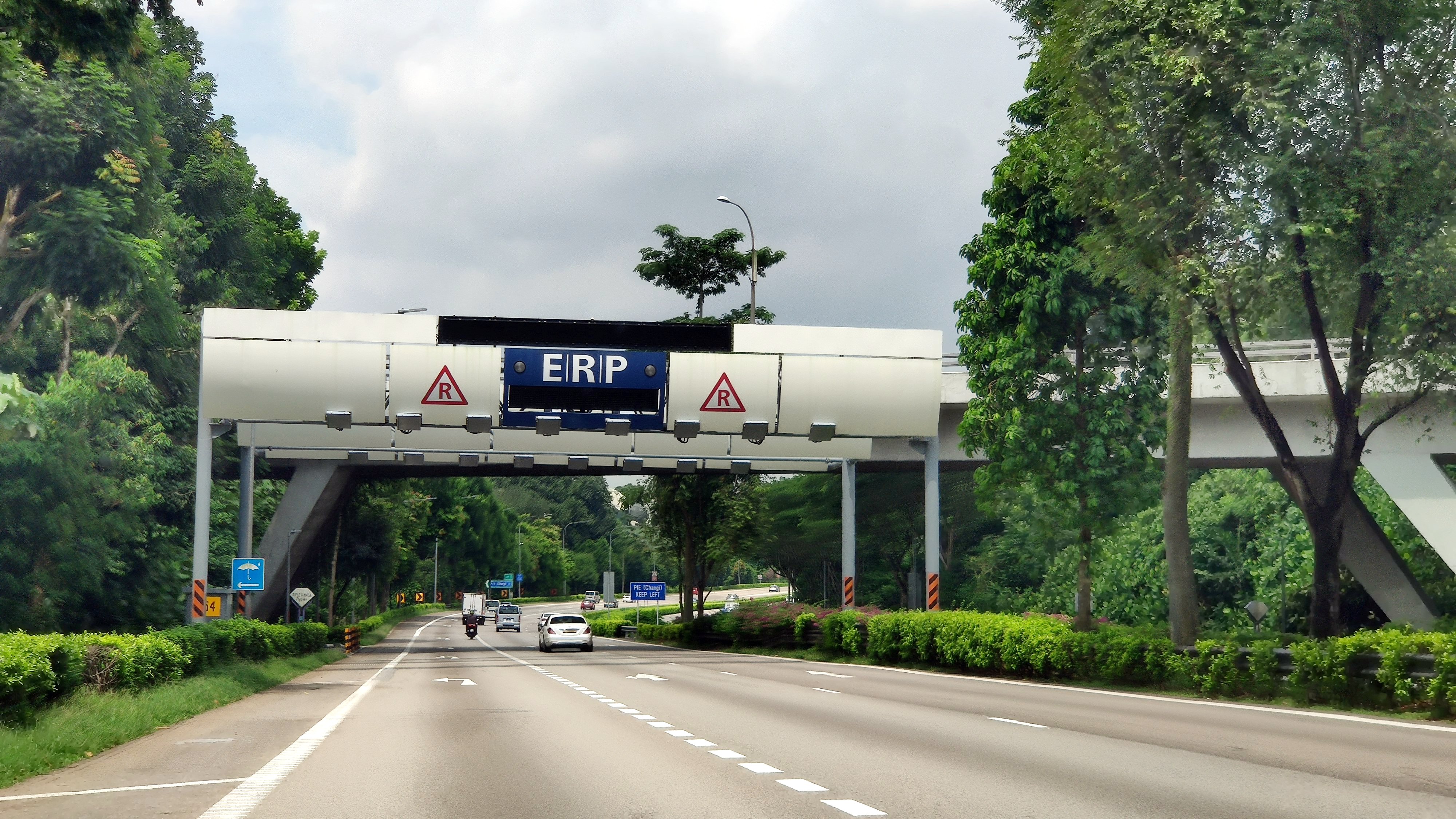
The gantries are coming down. Since October 2026, work crews have been unbolting the grey-blue frames that have spanned Singapore’s expressways and city streets for a generation, and by the middle of November a dozen were already gone. The last working gantries will go on charging until 31 December 2026; from 1 January 2027 the charge arrives by satellite instead, and the sign that a charged road lies ahead will be an oval of blue paint on the tarmac. It is the end of the most visible piece of a system that does something no other country attempts in quite the same way: it makes a driver pay for permission to own a car, and then pay again, per trip, to drive it. The two charges have different names, different histories and one shared reason. This is the story of both.

The Kopitiam's Two Eggs: The Breakfast That Outlived a Health Scare
Order breakfast in a Singapore kopitiam and it arrives in a form that has barely changed in a century: two soft-boiled eggs cracked into a saucer, with dark soy sauce and a shake of white pepper; kaya toast; and a cup of kopi or tea. In 2019 the National Heritage Board listed this “Traditional Breakfast of Kaya and Kopi” in Singapore’s inventory of intangible cultural heritage. Yet for roughly fifty of the years that Singaporeans were eating it, the two eggs in the saucer sat at the centre of one of modern nutrition’s longest-running scares — officially limited, warned against, and portioned out by the week. The guidance swung, swung back, and swung again. The breakfast never moved.

Lim Boon Keng: The Reformer Whose Name Is Now an MRT Station
Every morning, thousands of commuters tap in at Boon Keng station on the North East Line, pass under the name, and think nothing of it. The name is a man’s. Lim Boon Keng (1869–1957) was a doctor who treated the poor free of charge, the leading voice against the opium trade, a lawmaker for fourteen years, a co-founder of a girls’ school, of three banks and of an insurance company, the personal physician of Sun Yat-sen, and for sixteen years the unsalaried president of a university in China. His contemporaries called him the Grand Old Man of Singapore. Today, almost nobody hurrying through his station could say who he was.

Kampong Lorong Buangkok: The Last Kampong on the Mainland
It survived. Every other kampong on the mainland is gone, but this one is still here — and as of 2024, the rent for some of its houses is $6.50 a month. The most anyone pays is $30. Those figures have barely moved in decades — the same $6.50 to $30 range reported in 2007 and again in 2024 — and if a tenant is short of money, the landlady will take rice or fruit instead. There are twenty-five families left — twelve Chinese, thirteen Malay — living in wooden houses with zinc roofs along earth lanes, behind the HDB blocks of Buangkok Green. The landlady is Sng Mui Hong, who was seventy-one when CNA profiled her in November 2024, and who has promised her late father that the kampong will not be sold. “As long as I have enough to live, that’s already fine,” she said. “There’s no need to be greedy. Even if I get a lot of money, it will all be finished eventually.” This is Kampong Lorong Buangkok, the last kampong on mainland Singapore — a village that was supposed to disappear with all the others, and didn’t.

Pulau Semakau: From Fishing Village to the Island Made of Rubbish
In 1977, Minah Bte Gap and her husband Rani Bin Omar were resettled from Pulau Semakau to a one-room rental flat at Telok Blangah, on the Singapore mainland. They rarely slept in it. They gave the flat to their son, went back across the water, and lived on in a run-down beach hut on the island they had been moved out of — fishing, selling the good catches to the islanders of neighbouring Pulau Seking, cooking fish and rice on a kerosene stove. Minah was ninety when the makers of the Island Nation documentary found the story. “Our hearts are attached to the island,” she said. “We can’t do the same things on Singapore, no?” The island she could not leave is now Singapore’s landfill — the only one it has left, an island quite literally made of the country’s rubbish. This is the story of the two fishing villages that stood where the rubbish goes, of the strange living island the landfill turned out to be, and of the newest turn in its life: the effort to dig the rubbish back up, in a manner of speaking, and build with it.

Force Z: The Sinking of the Prince of Wales and Repulse
On the 2nd of December 1941, two of the most powerful warships in the world came up the Johore Strait and anchored at Singapore, and the island thrilled to see them. They were the first battle fleet ever based there, and they had been sent halfway round the world for one purpose: to frighten Japan into leaving Malaya alone. Eight days later both ships were on the seabed off Kuantan, sunk by aircraft in under two hours, and 840 of their men were dead. No shot from Singapore’s famous guns had been fired in their defence, because the guns faced the sea, and the blow had come from the air. This is the story of the deterrent that deterred nothing — and of the two wrecks, war graves both, that are still being fought over today.

The Bank of China Building on Battery Road
In May 1937, the Bank of China paid $715,000 for one of the most valuable properties in Singapore — a marble-fronted banking palace on Battery Road — and then, for ten years, did not move in. The palace stayed a department store, the bank stayed down the road in Cecil Street, and when the bank finally took possession in 1947 it was only to pull the whole thing down. The building the Bank of China is known by in Singapore is the tower it built on the site afterwards. The palace it bought, and never used, is the forgotten half of the story.

Wee Bin, the Shipping Magnate Whose Firm Outlived Its Own Name
In March 1911, the Straits Times announced the end of one of Singapore’s oldest Chinese businesses. “Steps are in progress,” it reported, “to wind up the well-known and long-established business of Messrs. Wee Bin and Co., of 106 Market St.” Three weeks later the firm’s steamers were sold by public auction on the waterfront they had served for half a century.

The Hotel de l'Europe, Singapore's Grand Hotel Before the Raffles
In 1889, a young Rudyard Kipling passed through Singapore and left its hotels with a piece of advice that travellers repeated for decades: “Feed at Raffles and sleep at the Hotel de l’Europe.” The Raffles Hotel’s managers liked the first half so much that they quietly borrowed it for their own advertising, trimmed to just “Feed at Raffles”. The second half pointed across the Padang to the Raffles’ great rival — a hotel that was, for much of the nineteenth century, the grandest address in Singapore, and that today has vanished so completely that most people walk over its site without knowing it was ever there.

The Pipelines That Feed Singapore
On Saturday the 24th of October 2026, Indonesia cut the natural gas it sends to Singapore by pipeline, to keep its own power stations running after a long blackout on Batam. In Singapore, nothing went dark. The Energy Market Authority said the cut came to less than 2% of the gas the country uses each day, and that there was enough gas to go round. That it barely registered goes back to three pipes laid under the sea between 1992 and 2003, and a backup built on Jurong Island ten years later.

The Post Office Riot of 1876
On the morning of Friday the 15th of December 1876, a small shop at 81 Market Street opened for business as Singapore’s new Chinese sub-post office. It had been set up by the colonial government to carry Chinese workers’ letters and savings home to their families in China, cheaply and safely. Soon afterwards a crowd wrecked it, and by the end of the day the police had fired on rioters at two police stations and three men were dead.
Alkaff Mansion and the Alkaffs: A Hadhrami Family on Telok Blangah Hill
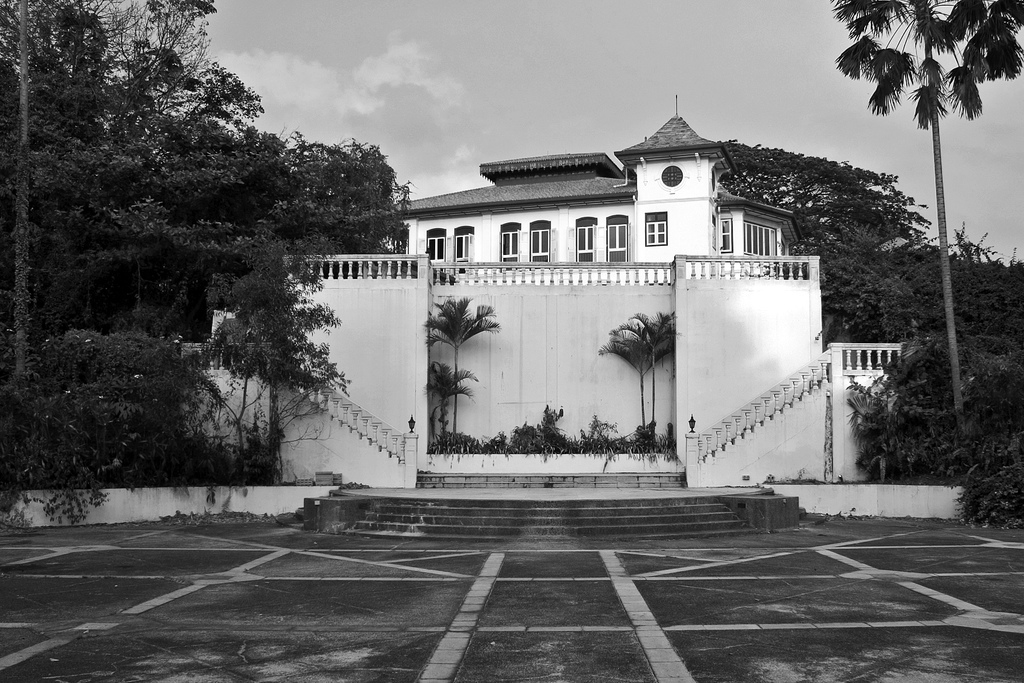
On top of Telok Blangah Hill, above Keppel Harbour, stands a white two-storey house with a red-tiled roof and a small clock tower. It was built around 1918 as a weekend retreat by the Alkaffs, an Arab family whose fortune began with trade in spices, sugar and coffee. The family came from the Hadhramaut, a long desert valley in what is now Yemen, and for a few decades it owned some of the best-known landmarks in Singapore.

The Sisters' Islands and Singapore's First Marine Park
Two small wooded islands sit side by side south of Sentosa, so close together that from the sea they look like a pair. A Malay legend says they were once two sisters who drowned there in a storm. In the colonial era soldiers fired howitzers at targets on them, in the 1970s they were reclaimed into picnic islands with swimming lagoons, and since 2014 they have been the heart of Singapore’s first marine park, where hawksbill turtles now nest and hatch.

The Ghee Hin and the 1890 Ban on the Secret Societies
On the 1st of January 1890, a new law came into force in the Straits Settlements, and with it the oldest Chinese society in Singapore, the Ghee Hin, had to close. For more than sixty years the secret societies had taken in new arrivals from China, found them work, settled their quarrels and fought each other in the streets, and by 1888 they counted some 65,000 members in Singapore alone. Within months, the headmen of the ten societies the government had declared dangerous handed in their seals, flags and books.

The Exchange Banks of Raffles Place: Chartered, HSBC and Mercantile
For a century, the money that moved Singapore’s trade passed through a few buildings around one square. The Chartered Bank, the Hongkong and Shanghai Bank and the Mercantile Bank of India were British “exchange banks,” set up to finance trade between Asia and Europe, and from the 1850s they made Raffles Place the colony’s banking quarter. Their domed and columned offices were replaced, one after another, by the towers that stand there now, and two of those towers were built by the same banks on the same corners.

Syed Mohamed Alsagoff and the Estate That Printed Its Own Money
On the 1st of May 1878, a press in Singapore printed a set of banknotes that no bank had issued. They were worth 25 cents, 50 cents, one dollar and two dollars, they were printed on one side only, and each was signed by hand. They were meant to be spent in one place, the estates of an Arab merchant named Syed Mohamed Alsagoff on the island of Kukup, off the south-western tip of Johor. The Sultan of Johor had given him the land, and with it the right to issue his own money.

The Changi Murals: Stanley Warren's Chapel Paintings at Roberts Barracks
In September 1942, in a prisoner-of-war hospital at Changi, a British bombardier named Stanley Warren began painting Bible scenes on the walls of a small chapel. He was so ill with dysentery and kidney disease that he could only work for ten to fifteen minutes at a time, and his paints were scrounged camouflage paint and billiard chalk. Within two years his five murals had vanished under coats of distemper, and Warren went home believing they had been destroyed. They are still there today, in a building inside an air force camp that the public cannot enter.

Kusu Island and the Ninth-Month Pilgrimage
On Sunday the 17th of October 1948, a record 5,000 Chinese men, women and children crossed from Singapore to Kusu Island by motor sampan. It was the birthday of the deity Tua Pek Kong, on the 15th day of the ninth lunar month, and the high point of a pilgrimage that lasts the whole month. Most of them then climbed a small hill at the other end of the island to pray at the shrine of a Muslim holy man. The pilgrimage is still made every year, and this year’s season runs from the 10th of October to the 8th of November.

The Chinese Protectorate: Pickering, the Poh Leung Kuk and the Coolie Trade
On the 18th of July 1887, a Teochew carpenter named Chua Ah Siok walked into the office of the Protector of Chinese in Singapore, saying he had a petition to present. When he reached the Protector, William Pickering, he threw the iron head of an axe at him. It struck Pickering on the forehead, and he never fully recovered. The attack was blamed on a secret society, and it was aimed at the man who, for ten years, had run the colony’s first serious attempt to protect Chinese migrants from the trade that brought them to Singapore.

From Graves to Gardens: How Singapore Makes Room for Its Dead
By 1985, Singapore had cleared 21 cemeteries and exhumed about 120,000 graves to make room for flats, roads and the MRT. The clearing went on after that: Bidadari, once the island’s largest cemetery, was emptied in the early 2000s, and today even a new grave is leased for only 15 years. Over the same decades, Singaporeans changed how they lay their dead to rest, from burial to cremation, from cemeteries to columbaria, and now to gardens where the ashes go back into the soil.

Hajjah Fatimah: The Widow Who Ran a Fleet and Built a Mosque
In the early years of British Singapore, a widow from Malacca ran one of the trading businesses on the Kampong Glam shore, with ships of her own and houses across the town. Robbers broke into her home on Java Road twice, and the second time they set it on fire while she was away. She gave thanks for her escape by building a mosque on the site of her house, and in 1845 and 1846 it went up beside the sea. The mosque still stands on Beach Road and still bears her name, Hajjah Fatimah, but the sea has long since moved away.
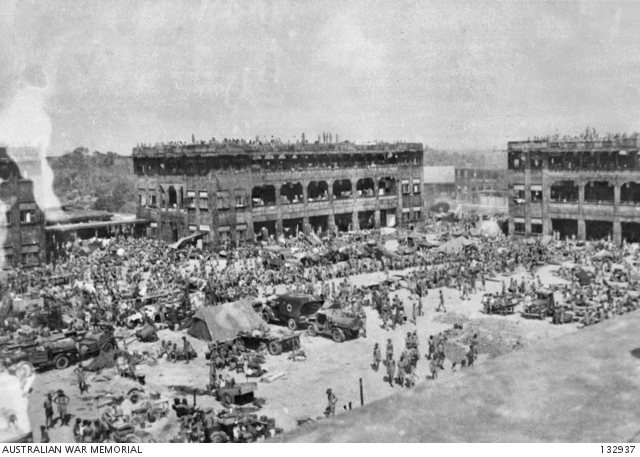
The Selarang Square Squeeze, 1942
On the 2nd of September 1942, somewhere between 15,000 and 17,000 British and Australian prisoners of war were marched into the barracks square at Selarang, in Changi, and kept there until they agreed to sign a promise not to escape. The square had been built for a single battalion. For the next four days the men lived on it and on the roofs and stairs of the barrack blocks around it, with a few taps for water and latrines dug through the parade ground, while dysentery spread. One of them, an Australian private named George Aspinall, photographed the square in secret with a small folding camera, and his pictures are the reason we can still see it.

Robinsons and the 1972 Fire: 162 Years of Singapore's Oldest Department Store
Just before ten o’clock on the morning of the 21st of November 1972, an overloaded electrical circuit caught fire inside Robinsons, the department store on Raffles Place. Within minutes the four-storey building was alight, and nine people died, eight of them trapped in the store’s lifts when the power failed. Robinsons was 114 years old that morning. It reopened on Orchard Road twenty days later, and it went on trading for almost half a century more, until its last Singapore store closed in January 2021.

The Last Race at Kranji: 182 Years of the Singapore Turf Club
On the 5th of October 2024, about 10,000 people went to Kranji for the last race meeting of the Singapore Turf Club. The last race of the day was the 100th Singapore Gold Cup, and when it was over, horse racing in Singapore ended after 182 years. In that time the club raced on three courses: an open plain off Serangoon Road that is now Farrer Park, a larger course at Bukit Timah, and finally Kranji. Each move took the horses further from the town, and each of the three sites has since been taken back for the city’s other needs.

The Singapore Sweep: How the Lottery Went Legal
On the first Wednesday of every month, Singapore Pools draws the Singapore Sweep, a lottery with 3.5 million seven-digit numbers and a first prize of $2.3 million. Its rules still describe it as a “sweepstakes game”, a word that comes from the racecourse, and the game itself began at the Singapore Turf Club in 1966. At the end of 1968 it was taken over by Singapore Pools, a government-owned company set up that year to give people a legal way to bet and to take business away from the illegal lotteries. Between them the Sweep, Toto and 4-D became fixtures of Singapore life, and all three are still drawn today.

Chek Jawa: The Shore That Was Saved by a Survey
In December 2000 a botanist named Joseph Lai was guiding a group of schoolgirls around Pulau Ubin when the tide went out at Chek Jawa, the island’s eastern tip. The flats it left behind were alive with sea stars, sea anemones, sponges, seagrass and crabs. Lai later found out that the shore was due to be reclaimed. Over the next year volunteers, scientists and more than a thousand members of the public came to see it, and on 20 December 2001, days before work was due to begin, the Ministry of National Development announced that the reclamation would be deferred. Chek Jawa is still there today, a boardwalk away from the Ubin jetty, and it is still officially a deferment rather than a reserve.

The Marquis and the Museum: Tokugawa Yoshichika in Syonan, 1942–44
On 5 September 1942 the Syonan Times reported that Marquis Yoshichika Tokugawa, adviser to the Japanese military administration in Malaya, had been made director of the Syonan Museum, Botanical Gardens and Library. These were the old Raffles Museum and the Botanic Gardens under new names. The paper added that “no damage was caused” to them in the fighting for Singapore. For the next two years a Japanese nobleman who had once come to Malaya to hunt tigers presided over the island’s two great scientific collections. Working under him, and outside the internment camps, were two British botanists, Eric Holttum and John Corner. Both collections came through the war largely intact, and their descendants are still in Singapore today.

The Southern Special Students: Malayan Youths Sent to Japan, 1943–45
On 4 June 1943 the front page of the Syonan Shimbun reported that 33 “potential leaders” from Malaya and Sumatra were being trained at Woodsville, off Upper Serangoon Road, in Japanese language, physical culture and “the Nippon spirit”. The fifteen with the best results would go on to three years of study in Japan. Two of the 33 were from Syonan itself, “two Malai youths named Bostam and Kasmani”. Over the next two years about 200 young people from across occupied Southeast Asia went to Japan as Nanpō tokubetsu ryūgakusei, Southern Special Students. A few of them ended up at a university in Hiroshima, and two of the Malayans among them died after the atomic bomb fell on the city on 6 August 1945.

Saving for the Emperor: The Occupation's Post Office Savings Drives, 1942–45
On 16 July 1945, a month before Japan surrendered, the Syonan Shimbun carried an advertisement from the Malai Banking Association. “Fourth time!” it announced, offering another round of its “Fixed Deposit with Bonus” scheme, with a savings encouragement prize of $50,000. The banks would take deposits from 1 August to 31 August 1945, and the prize draw was set for 31 October. On the same page the Postmaster-General told readers that money in the Post Office Savings Bank would be “absolutely safe”. For almost three years the Japanese military administration had pressed the people of Singapore and Malaya to save, through post office drives, bank campaigns and prize draws, and by the middle of 1945 more than half a million people had savings accounts. None of the money they deposited during the Occupation was ever recognised after it.

Labuan: The Borneo Island That Was Part of Singapore
For almost forty years, a small island off the coast of Borneo, about 1,100 kilometres from Singapore across the South China Sea, was governed from Singapore. From 1 January 1907 Labuan was part of the Settlement of Singapore, and from 1912 it was a settlement of its own within the Straits Settlements, run by a Resident who answered to the Governor in Singapore. Today it is a Malaysian federal territory and an offshore financial centre, and few people in Singapore know that it was once on the same map.

From Borneo to Singapore: The Sabah and Sarawak People in Singapore's Story
Elizabeth Choy, the wartime heroine who survived 200 days in the hands of the Kempeitai, was born in Kudat, in British North Borneo. Hugh Zehnder, the lawyer after whom Zehnder Road is named, was born in Sarawak. So was Wee Kheng Chiang, who founded the bank that became UOB. They were not exceptions. For more than a century and a half, people, money and ships have moved between Singapore and the two Borneo territories that are now the Malaysian states of Sabah and Sarawak, and some of the people who came from there left a lasting mark here.

Blakang Mati Before Sentosa: The Island's Kampongs and Barracks
For most of its recorded history, the island we now call Sentosa was Pulau Blakang Mati, a working island of fishing villages, fruit gardens and, from 1878, British forts and barracks. By 1959 about 1,000 people lived in two kampongs on its northern shore, many of them working for the soldiers. In 1970 the island was renamed Sentosa and rebuilt as a resort, and its villagers moved to new flats across the harbour at Telok Blangah.

Sir Manasseh Meyer: Singapore's Jewish Landlord and the Synagogues He Built
Sir Manasseh Meyer arrived in Singapore from Calcutta as a boy of 15 in 1861 and died at his house on Oxley Rise in 1930, reputed to be a millionaire in sterling several times over. In between he built a trading firm, became one of the largest property owners in the colony, and paid for both of the synagogues that Singapore’s Jewish community still uses today. His hotels, flats and shophouses have almost all gone, but the synagogues, a college building and a school still carry his name.

Tanjong Katong by the Sea: From Dunman's Bungalows to the Seaside Resort
For more than a century, Tanjong Katong was where Singapore went to the seaside. Meyer Road and Marine Parade Road ran along the beach, and many of the houses on their seaward side had gardens that ended at the sand. The sea is now several hundred metres away, beyond East Coast Park and the East Coast Parkway, and a station on the Thomson–East Coast Line opened on Meyer Road in 2024. How a coconut coast became a resort, then a suburb of seaside houses, and finally an inland neighbourhood is also a story about property: what people paid to live by the sea, and what happened to their land when the sea moved away.

Ya'acob Mohamed: The Forgotten Pioneer
When Ya’acob Mohamed stepped down from Parliament in December 1980, Prime Minister Lee Kuan Yew paid tribute to him for his part in winning Malay support for the People’s Action Party in the early 1960s. Ya’acob had left UMNO for the PAP in 1958, taking 30 of its members with him, and went on to serve as a minister of state and as Singapore’s envoy to the Philippines, India and Egypt. He also represented the Southern Islands, whose villages and schools have since disappeared, and today he is far less well known than many of the first-generation leaders he worked with.

Thomas Dunman: The Merchant's Clerk Who Built Singapore's Police
Dunman Road in Katong and Dunman High School carry the name of a police chief who was almost never seen in a uniform. In 1843, when gang robberies were a nightly event and Singapore’s police were few, badly paid and poorly led, the East India Company’s government handed the force to Thomas Dunman, a clerk in a merchant firm with no police training at all. He ran it for the next 28 years, and by the time he retired in 1871 he had turned it into a disciplined, full-time force.

John Turnbull Thomson: The Surveyor Who Drew 1840s Singapore
Thomson Road, Upper Thomson, Thomson Plaza and the Thomson–East Coast Line all carry the name of a man few Singaporeans could say much about. John Turnbull Thomson arrived in 1841 as the settlement’s Government Surveyor, aged twenty, and for the next twelve years he measured, mapped and built much of the settlement while also sketching and painting what he saw. His pictures of the market on the shore, the public buildings and the people at work are some of the few images of 1840s Singapore made by someone who lived there, and twenty years later he wrote a book about the place and the people he had known.

Interned in India: Singapore's Japanese Civilians, 1941–46
In the early hours of 8 December 1941, as Japanese bombs fell on Pearl Harbor and Singapore, the police in Singapore began rounding up every Japanese resident on the island. Shopkeepers, photographers, dentists, bank clerks, fishermen and their families were taken from their homes, and within weeks most of them were on their way to India, where about 2,700 civilians from Singapore, Malaya and the rest of British Asia spent the war behind the walls of a sixteenth-century fort in Delhi and then in a desert camp in Rajasthan. Few of them were ever allowed to make Singapore their home again.

Horsburgh Lighthouse: Building the Light on Pedra Branca
On 24 May 1850, Queen Victoria’s birthday, a steam frigate towed two ships out to a bare granite rock 37 miles east of Singapore. On board were the Governor of the Straits Settlements, an admiral, the foreign consuls and the Freemasons of Lodge Zetland in the East, who had come to lay a foundation stone with Masonic honours. The rock was Pedra Branca, and the stone was the first of a lighthouse that would carry the name of the hydrographer James Horsburgh. Its architect, the government surveyor John Turnbull Thomson, wrote a long account of how it was built, and more than 150 years later the building and running of that lighthouse were part of the evidence when the International Court of Justice decided who owns the rock.

Learning Nippon-go: The Occupation's Japanese-Language Drive, 1942–45
On 21 February 1942, six days after the British surrender, page 4 of the Syonan Times carried a small box headed “Nippon Lesson”. It listed eight everyday phrases and how to count from one to twenty-one: “Good morning: Ohayo gozaimasu”, “Thank you: Arigato”, “How are you? Ikaga desu?”. The paper had been the Straits Times until a week earlier, and its printer and publisher was now the Japanese novelist Ibuse Masuji. It was the first of hundreds of lessons. For the next three and a half years the military administration tried to make Japanese the common language of Singapore and Malaya, through schools, newspapers, radio, campaigns and pay, and the newspapers of the time show both how hard it pushed and how far it got.

Tani Yutaka, the “Tiger of Malaya”: The Man and the Wartime Legend
On 17 March 1942, a month after the fall of Singapore, a 30-year-old Japanese man died of malaria in a Singapore hospital. He had grown up in Kuala Terengganu, spoke Malay, had led a gang of robbers in the north of the peninsula, and had been recruited by Japanese military intelligence the year before the invasion. His name was Tani Yutaka. Within a year, newspapers in Japan had made him a hero, and a feature film called him Harimau Malai, the Tiger of Malaya. Much of what is told about him comes from those wartime accounts and from books written decades later, and the few records from his own time tell a plainer story.

Syonan Syoken: The Occupation's Government Lottery, 1942–45
On the afternoon of 10 September 1942, seven months into the Japanese Occupation, a crowd gathered in the old Victoria Theatre to watch a lottery being drawn. Women nominated by the different communities had been chosen to turn the drums, and a million one-dollar tickets were narrowed down to 62 winners. The first prize of $100,000 went to a 33-year-old banker from Kuala Lumpur who had bought 223 tickets. It was the first of more than thirty government lotteries the Japanese military administration put on sale in Singapore and Malaya, and it was announced from the start as a way to take money back out of people’s pockets.

The Orang Laut: The Sea People Who Kept Singapore's Waters
When Stamford Raffles and William Farquhar came ashore at the mouth of the Singapore River in January 1819, the people living in the boats moored along the bank were so frightened that they all fled. These were orang laut, the sea people, and by most accounts they made up the greater part of the island’s thousand or so inhabitants. They had lived in these waters for centuries before the British arrived, and their story runs on long after, to families who were moved off Singapore’s southern islands within living memory.

Singapore's Harbourmaster of 1604: Erédia's Map and the Lost Portuguese-Era Port
In 1604 the Malacca-born Portuguese mapmaker Manuel Godinho de Erédia drew a small sketch map of the waters around Singapore. Along the island’s shore he wrote a handful of Malay place names, among them Tanah Merah, Bedok and Tanjong Rhu, which are still on the map today, and one word which is not: Xabandaria, the quarters of the shahbandar, the harbourmaster. Two hundred years after the fall of the Singapura of the Malay Annals, and two hundred years before Raffles, the island still had a port, and someone was in charge of it.

The Singapore Stone: The Inscribed Rock Singapore Blew Up in 1843
In January 1843, on the orders of the man in charge of Singapore’s public works, a great slab of red sandstone at the mouth of the Singapore River was blown apart to clear the ground for Fort Fullerton. The slab had stood on the point since long before the British arrived, and its face carried about fifty lines of carved writing. It was the only ancient inscription ever found on the island, and in more than two hundred years of trying, nobody has managed to read it.

Forbidden Hill: The 1984 Dig That Found 14th-Century Singapura on Fort Canning
In January 1984 the American archaeologist John Miksic and a small team spent ten days digging test pits on Fort Canning Hill, beside the shrine known as the Keramat Iskandar Shah. For the first few days they found almost nothing of interest. Then the colour of the soil changed, and out came pieces of blue-and-white Chinese porcelain made in the 1300s. It was the first hard evidence that a town had stood on the hill some five hundred years before the British arrived, and that the Singapura of the old Malay chronicles was more than a story.

Munshi Abdullah: The Malay Scribe Who Watched Singapore Begin
One evening in March 1823, a young Malay teacher on his way to give a language lesson met William Farquhar, the British Resident of Singapore, coming the other way with his son, his son-in-law and four armed sepoys. When Farquhar heard where he was going, he told him to turn back and come along, because a man had run amok near a merchant’s house. Within the hour the teacher was holding Farquhar up as he collapsed, his coat soaked in blood. The teacher was Abdullah bin Abdul Kadir, known as Munshi Abdullah, and twenty years later he wrote the whole night down in the Hikayat Abdullah, one of the few first-hand accounts of Singapore’s founding years written in Malay.

P. Govindasamy Pillai: From Shop Boy to Serangoon Road Retail Pioneer
In 1905 a teenage runaway from a village in South India stepped ashore at Tanjong Pagar with 13 rupees and the clothes he was wearing. He found work in a provision shop on Serangoon Road, where he was paid in meals and a place to sleep rather than wages, and twenty-four years later he bought the shop. P. Govindasamy Pillai, popularly known as PGP, went on to build a chain of stores that reached Malacca and Johor, and he gave much of what he earned to temples, missions and hospitals. The stores that carried his initials closed in 1998, and his name is less familiar today than those of the Chinese business families of his generation.

Letters with Money: Singapore's Remittance Houses and the Savings Sent Home to China
For more than a century, a Chinese labourer in Singapore who wanted to send part of his wages to his family in China did not go to a bank. He went to a remittance house, often a tea merchant, a medicine hall or a grocer in the back streets near the river, which took his money and his letter, sent them to his home village in Fujian or Guangdong, and weeks later brought him back a reply. The letter that travelled with the money was called a qiaopi, and Singapore was the hub of the trade for the whole of Southeast Asia, with more remittance houses at one point than the rest of the region combined. When the colonial government tried to take the business over in 1876, it set off one of the town’s most serious riots.

Change Alley: Singapore's Lane of Money-Changers and Bargains
For about a century, the quickest way from the sea to the heart of Singapore’s business district was a narrow lane about a hundred metres long. Change Alley ran from Collyer Quay, where sailors and passengers came ashore at Clifford Pier, to Raffles Place, the square of banks and trading houses. It was named, by most accounts, for the money-changers who did business along it, and over the years it also became one of the busiest bazaars in the city, where tourists, sailors and the clerks and office workers from the surrounding buildings haggled over watches, pens, shirts and cloth. The open-air alley closed on 30 April 1989, and an air-conditioned arcade now stands on the site.

1903: The Straits Dollar, Singapore's First Money of Its Own
On the afternoon of 29 January 1906, the Legislative Council of the Straits Settlements fixed the value of the dollar at two shillings and fourpence in British money. The next morning’s Straits Times led its fifth page with the news, under the headline “Government tries to buy £100,000 at Saturday’s Rate and then lowers the Dollar”, and a reader wrote in that “a most painful sensation has been caused in Singapore”. What the day settled lasted far longer than the row. For the first time, Singapore had a dollar of its own whose value did not rise and fall with the price of silver, backed by reserves under a currency board, and that idea of a fully backed currency still underpins the Singapore dollar today.

Why Singapore's Merchants Asked to Leave British India: The 1867 Transfer to Crown Rule
At noon on Monday, 1 April 1867, a salute of guns from Fort Canning announced a ceremony at the Town Hall, the building that is today the Victoria Theatre. A crowd gathered outside, and inside, the Order constituting the Straits Settlements a colony of the Crown was read aloud. For four decades, Singapore, Penang and Malacca had been governed as an outlying part of British India, under orders from Calcutta. From that day they answered to the Colonial Office in London instead. The change had not been imposed from above. It was the result of a campaign of more than ten years by Singapore’s own merchants, who had grown tired of being ruled by a government that, in their view, understood little about their trade.

New Syonan: The Endau Settlement, 1943
On the afternoon of 1 February 1944, about 300 people left occupied Singapore for a stretch of newly cleared jungle near Endau, about 150 kilometres up the east coast of Johor. The Syonan Shimbun called them “pioneers in every sense of the word”. They were some 20 families, most of them from the Bukit Timah district, 46 girls from the Po Leung Kok home, and a party of labourers and technicians, sent to grow food at a settlement that had been named New Syonan. Within a year the paper was reporting more than 7,000 settlers there. The settlement was an answer to a simple problem: Singapore under the Japanese did not have enough to eat.

The $50 Million 'Gift' of 1942
On 25 June 1942, four months into the Japanese Occupation, the 72-year-old Lim Boon Keng led a delegation of Chinese community leaders from Singapore and Malaya to present a cheque for $50 million to General Tomoyuki Yamashita, the commander of the army that had taken the island. The next day the Syonan Times reported it as a “voluntary gift” from the Chinese, made to mark “their loyalty, sincerity and co-operation.” The money had in fact been demanded of them, under a levy that fell on every Chinese household and business of means, and when the community could not raise all of it, close to half was borrowed from a Japanese bank.

The Nanyang Volunteer Drivers of the Burma Road, 1939
On 18 February 1939, the Nanyang Siang Pau told its readers that a group of Singapore’s motor drivers would leave that day “to return to the homeland and serve.” They were the first 80 of about 3,200 young men, and a few women, who left Singapore, Malaya and the rest of South-East Asia that year to drive and repair the lorries on the Burma Road, the mountain route that had become China’s last open supply line in its war with Japan. Around a third of them died. Their story is usually told as one of loyalty to China. It is also the starting point of a change in where the Chinese of Singapore thought of as home.

Lien Ying Chow, the Banker Who Escaped to Chongqing
In the last days before Singapore surrendered to the Japanese in February 1942, a Blue Funnel cargo liner called the Gorgon left the harbour for Australia with more than 350 refugees on board. One of them was Lien Ying Chow, the 35-year-old president of the Singapore Chinese Chamber of Commerce, who was carrying some cash and two diamonds hidden in the lining of his clothes. The ship survived a Japanese dive-bombing attack on the way and reached Fremantle on 20 February. Seven years later, Lien opened the first new bank in postwar Singapore, Overseas Union Bank, and for half a century it was one of the island’s four big local banks.

When America Crashed, Singapore Sank: The Great Depression and the Contagion That Still Reaches Us
In 1929 a pound of Malayan rubber sold for an average of 34 cents. By June 1932 it sold for 4.95 cents, the lowest price ever recorded. Singapore did not grow rubber, but it lived by processing, financing and shipping the rubber and tin of the Malay Peninsula, and much of both went to the United States, where the car industry had collapsed after the Wall Street crash of 1929. Singapore’s later recessions have arrived by other routes as well, and setting them side by side shows a pattern: a crash abroad does the most damage when it cuts demand for the goods Singapore depends on most. That pattern is worth knowing today, when a large part of the island’s growth comes from making the chips and equipment behind artificial intelligence.

The Yokohama Specie Bank: Japan's Bank in Prewar Singapore
On 20 March 1942, five weeks after the British surrender, the Yokohama Specie Bank reopened for business in Singapore, now renamed Syonan. It did not go back to its own office in Meyer Chambers. A notice in the Syonan Shimbun gave its new address as the “Late Hongkong and Shanghai Banking Corp.”, the building of the British bank whose staff had just been interned. The Yokohama Specie Bank had been in Singapore since 1916, financing the colony’s trade with Japan from a corner of Raffles Place, and for most of that time it was simply one of the foreign exchange banks in the square. Its story shows how closely a bank could be tied to the fortunes of its government.

Fort Palmer, Fort Canning and the Forts That Guarded a Free Port
On the afternoon of 13 October 1891, a party of ladies and gentlemen climbed Mount Wallich, above the docks at Tanjong Pagar, to watch the Governor press a button. An electric wire ran from the hilltop to two new 10-inch breech-loading guns in the fort on neighbouring Mount Palmer, the heaviest guns in any fortification in the Straits Settlements, and when he pressed it they fired at a target boat three and a half miles out to sea. Seven months earlier, at what the Straits Times called the largest gathering ever held in Singapore, the town’s merchants had protested against the sum London wanted the colony to pay each year for the soldiers who manned such guns. A port that charged no duties on its trade still needed forts, and for most of the nineteenth century the question of who should pay for them was argued over as hard as where to put them.

UOB: The United Chinese Bank of 1935 and the Family That Built It
On the morning of 1 October 1935, a new bank opened its doors at the corner of Chulia Street and Bonham Street, facing Raffles Place, in premises formerly occupied by the Yokohama Specie Bank. It was called the United Chinese Bank, it had seven founders and $1 million of paid-up capital, and it was set up to serve Singapore’s Hokkien merchants in the middle of the Great Depression. Ninety years later, as United Overseas Bank, it is one of Singapore’s three big local banks. Much of that growth came from buying other banks, one of them older than itself.

The Progressive Party: The Colonial-Era Party That Won Singapore's First Elections, Then Vanished
When the results of Singapore’s 1955 election were announced, the Progressive Party had won 4 of the 25 seats. It had won the two elections before that, in 1948 and 1951, and it went into 1955 as the colony’s leading party. Its president, C. C. Tan, lost his own contest, in Cairnhill, to David Marshall, whose Labour Front formed the new government. Ten months later the Progressives voted to dissolve their party, and at the 1959 election the party they had merged into won no seats at all. Their story is as much about who was allowed to vote, and how the votes were divided, as about the party itself.

Barings, 1995: The Singapore Trading Desk That Broke a 233-Year-Old Bank
On the afternoon of Thursday 23 February 1995, Nick Leeson told a colleague at Barings’ office in Singapore that he had to visit his wife in hospital, and left. He did not come back. Leeson ran the bank’s futures business on the Singapore International Monetary Exchange, known as SIMEX, and over two and a half years he had hidden mounting losses in an account numbered 88888. Three days later Barings, a London bank founded in 1762, was insolvent.

The Run on the Banks, 1914: When War in Europe Emptied a Singapore Bank
On Tuesday 4 August 1914, the day before news of war in Europe was published in Singapore, depositors began to rush the Chinese Commercial Bank on Kling Street. By the next evening they had taken out more than $300,000, and the bank closed its doors. It would stay shut for eight weeks, and the story of how it reopened says a good deal about how a bank could be saved before deposit insurance existed.

The Chinese Banks That Became OCBC
On the morning of 20 November 1913, a crowd gathered outside the Kwong Yik Bank on Kling Street to find a notice pinned to its doors: the bank could not pay its depositors. Singapore’s first Chinese bank had lasted ten years. Over the next two decades, more Chinese banks opened, most of them run by and for one dialect community, until the Great Depression pushed three of them into the merger that created OCBC in 1932.
The Hills Singapore Dug Into the Sea
In the 1880s, three hills stood along the waterfront south of Singapore’s town: Mount Erskine, Mount Wallich and Mount Palmer. Within fifty years, Mount Wallich and most of Mount Palmer had been blasted, dug up and carted into the sea to make new land, and Mount Erskine has gone too. Today the only reminders are a few street names and one small knoll with a shrine on top.

When Telok Ayer Street Was the Beach: Singapore's First Land Reclamations
When the Thian Hock Keng temple was built on Telok Ayer Street between 1839 and 1842, it stood on the beach. Sailors landing from China came up from the water to give thanks to Mazu, the goddess of the sea, for a safe crossing. By the end of the century it was four streets from the sea, and today the water is further away still. The land in front of it was made by the colonial government, which levelled hills, built seawalls and filled in the bay.

The Indian Convicts Who Built Colonial Singapore, 1825–1873
On 18 April 1825 the brig Horatio reached Singapore with 80 convicts from Madras, transferred from the British penal station at Bencoolen in Sumatra. A week later 122 more arrived from Bengal. For the next 48 years Singapore took in convicts sentenced to transportation in British India, and much of the early town, from its roads to its cathedral and the Governor’s house, was built by their labour.

Before the Banks: How Singapore's Merchants Kept Their Money
For its first twenty-one years, Singapore was one of the busiest free ports in Asia and had no bank at all. Its merchants still borrowed, lent, paid and kept their money, through the trading firms known as agency houses, through moneylenders, and through credit extended from one trader to the next. When the first bank finally opened a branch in 1840, it joined that system rather than replacing it.

The Sikh Prisoner of Outram Road and the Shrine That Moved Twice
In June 1850 the Straits Times reported, in a few lines, that a ship from Calcutta had brought two State prisoners to Singapore. One of them was Bhai Maharaj Singh, a Sikh religious leader who had opposed British rule in Punjab, and he died in the jail on Outram Road six years later. The place where he was cremated became a shrine that people of several faiths visited for decades, and it has since moved twice to reach the Silat Road gurdwara, where it stands today.

Singapore's First Election, 1948: 22,000 Voters in a City of 940,000
On 20 March 1948 Singapore held its first election. Six seats on a Legislative Council of twenty-two were open to the vote, and 22,334 people were registered to cast one, in a colony of about 940,000. The Sunday Times the next morning reported that 63 per cent of them had gone to the polls. Eleven years later, at the 1959 election, 586,098 people were registered and voting was compulsory.

The Gurkha Contingent: Singapore's Neutral Force, 1949–1965
In February 1949 an officer of the Singapore police flew to New Delhi to bring back 148 Gurkhas recruited in the hills of Nepal. They were to form a new riot squad, replacing the Sikh contingent that had kept order in Singapore since 1881, and they were valued for one quality above all: they belonged to none of the communities they might be called on to police. Within two years that quality was tested in the worst communal riots Singapore had seen, and the Gurkha Contingent has been part of the Singapore police ever since.

The Sikh Police Who Came in 1881, and the Community They Left Behind
On 26 March 1881 an assistant superintendent and 54 Sikh recruits from Punjab arrived in Singapore to join a police force that was struggling to keep order in a crowded, fast-growing port. By the end of the year the Sikh Police Contingent numbered 165 men. The contingent was disbanded in 1945, but the community that grew up around it, with its own gurdwara on Silat Road, is still in Singapore today.

Singapore's First Chief Minister: What David Marshall Could and Couldn't Do, 1955–56
At 5 p.m. on 7 June 1956, David Marshall resigned as Singapore’s first Chief Minister, fourteen months after taking office and three weeks after constitutional talks in London had ended without agreement. He had said he would resign if he could not bring home full internal self-government, and he kept to that. The Straits Times of the following morning put the news across the top of its front page under the headline “Lim told: take the helm,” and turned at once to the man who would succeed him. The story of those fourteen months is as much about what the office could not do as about what Marshall did with it.

The Private Company That Ran Singapore's Harbour, 1864–1905
In 1905 the government of the Straits Settlements took over the Tanjong Pagar Dock Company and paid its shareholders about $755 for every $100 share, a price that was still being questioned in the British House of Commons more than a year later. The company had begun in 1864 as the first local joint-stock company to offer shares to the public in Singapore, and by the time it was bought out it controlled nearly all of the docks and wharves at the deep-water harbour that had made Singapore a coaling stop for steamships.

Who Pays for the News? Singapore Has Been Asking Since 1824
Singapore’s first newspaper was printed on rough Chinese-made paper, folded into four small pages and sold for 18 Spanish dollars a year. It got through its first five years on a government subsidy of 60 Spanish dollars a month, and once that subsidy was withdrawn and competitors arrived, it did not last another decade. Nearly two centuries later, the question that decided the Singapore Chronicle’s fate, who pays for local news in a small market, is being answered again, and public money is once more part of the answer.

The Spanish Dollar That Ruled Singapore's Early Economy
When the East India Company finished buying Singapore in 1824, the bill was written in a coin that belonged to neither Britain nor Singapore. Sultan Hussein received 33,200 Spanish dollars and a monthly allowance of 1,300 for life, and the Temenggong received 26,800 and 700 a month. The money that priced the island’s cession had been struck in Mexico and Peru in the name of the King of Spain, and it stayed Singapore’s everyday money for another eighty years.

The Company That Outlived Its Own Tin Smelter
By 1912, a company most Singaporeans today have never heard of was smelting roughly a third of the world’s tin, on a small island just off the harbour. Its ingots, stamped “Straits Tin,” were internationally recognised as the purest grade money could buy. The smelter that made that possible is gone, the island it stood on is a naval base, and the company itself doesn’t smelt anything in Singapore anymore. It is, remarkably, still around, still listed, still making money, more than a century after the furnaces on Pulau Brani first lit.
How Opium Paid for Colonial Singapore
For most of the nineteenth century, the government that ran Singapore paid its bills with money from opium. Not through smuggling, and not by looking the other way, but openly: the colonial administration auctioned off the exclusive right to prepare and sell the drug to the highest bidder, and for decades the proceeds covered somewhere between 40 and 60 percent of everything the government spent. It was the single largest source of public revenue in a free port that famously charged no import duties, and the arrangement ran for well over a century before Singapore turned around and made the very trade that had funded it a crime.

Lim Peng Siang, the Man Singapore Called Its Greatest Magnate
In July 1936, a reporter for a Singapore Sunday paper called Lim Peng Siang one of “the greatest magnates living in Singapore.” He had built a rice mill and an oil mill into a group that spanned shipping, banking and cement, and for a few decades he was one of the most important Chinese businessmen in the colony. Today his name is almost unknown, attached to little more than a minor quay near the port his ships once used.

The Japanese Fishermen Who Fed Prewar Singapore
In the 1930s, Japanese fishermen supplied 40 to 50 per cent of the fresh fish sold at Singapore’s municipal markets, even though there were only about a third as many of them as local Chinese and Malay fishermen. Within a few years, licence limits, a boycott and growing suspicion had cut the fleet down to a fraction of its size, and by December 1941 it was gone.

Song Ong Siang: The Chronicler Who Became Singapore's First Chinese Knight
If you have read much history of the Singapore Chinese, you have almost certainly relied on a 602-page book published in London in 1923, at £12 a copy. Its author, Song Ong Siang, was a lawyer, a magazine editor, a volunteer captain and eventually a knight, and yet few people today know his name.

The 1915 Singapore Mutiny: The Week a Regiment Rose on Chinese New Year
On the afternoon of 15 February 1915, which was Chinese New Year, about 800 Indian soldiers of the 5th Light Infantry were stationed at Alexandra Barracks, some of them guarding German prisoners of war in the middle of a world war. By evening, some of them had turned their rifles on their own officers and on civilians. It took the better part of a week, and warships from Japan, France and Russia, to put it down.

The Fullerton Building: The Post Office With a Lighthouse on the Roof
For about twenty years, a revolving beacon of 540,000 candelas swept the harbour from the roof of Singapore’s General Post Office, visible from ships some 29 kilometres away. Many people who walk past the building today, now a luxury hotel, have never heard that it ever guided anyone anywhere.

John Crawfurd: The Diplomat-Scholar Who Actually Secured Singapore's Ground
Raffles Place, Raffles Hotel, Raffles Institution, a university, an MRT interchange, and a statue at the spot where he supposedly first stepped ashore — Sir Stamford Raffles’s name is stamped across Singapore more than almost anyone else’s. The man whose actual signature secured the island for Britain, on a treaty that ceded it “in full sovereignty and property… for ever,” has a street, a lane and a bridge named after him. All three spell his name wrong.

'Banana Money': The Wartime Currency That Inflated to Nothing
A $10 note from the Japanese Occupation, its face printed with a bunch of bananas, sells today to collectors for a few dollars — which is, almost to the cent, what it was actually worth by the time Japan surrendered in 1945. The note promises “THE JAPANESE GOVERNMENT PROMISES TO PAY THE BEARER ON DEMAND TEN DOLLARS.” It never did. Within three and a half years, it went from being worth exactly as much as the currency it replaced to not being worth the paper it was printed on — literally.

The Botanic Gardens and the Rubber That Remade Malaya
Joggers, wedding photographers and picnicking families fill the Singapore Botanic Gardens most weekends, and few of them know they’re walking through the origin point of one of the twentieth century’s biggest economic transformations. A UNESCO World Heritage Site since 2015 — the only tropical botanic garden on the list — it looks like exactly what it is: a beautifully kept research garden. It doesn’t look like the place that decided, more or less single-handedly, that Malaya would become the world’s rubber supplier.

The Cathay Building: Singapore's First Skyscraper
At the corner of Handy Road and Dhoby Ghaut, a cream Art Deco tower with the word CATHAY running down its face still stands in front of a glass-walled shopping mall. Most people walking under it are on their way to a movie or a meal and have no idea that the mall behind it isn’t the original building at all — the tower is the only piece of it left, and it’s technically a national monument even though the building it belonged to was torn down.

Tan Kim Seng and the Fountain Nobody Can Explain
At Esplanade Park, an ornate Victorian iron fountain has stood for well over a century, its three tiers ringed with classical figures and its basin fed by four spouts shaped like Poseidon’s face — or it would be fed, except several of those spouts had been sealed shut for years, quietly turning a monument to a water donation into a fountain that couldn’t actually run water. Thousands of joggers and tourists pass it every week. Almost none stop to read the inscription that explains why it’s there, or who Tan Kim Seng was.

Cold Storage and the Frozen-Meat Trade
On 8 June 1903, a company called Cold Storage was registered in Singapore to solve one very specific problem: there was no reliable way, in the tropics, to keep a piece of meat cold long enough to eat it safely. Everything the company became afterwards — the supermarkets, the ice cream, the dairy farm, even a shopping mall on Orchard Road — grew out of that one narrow need.

Linggiu Reservoir: The Dam Singapore Built Inside Another Country to Secure Its Own Water
In 1962 Singapore signed a treaty guaranteeing it up to 250 million gallons of water a day from the Johor River, a legal right that runs until 2061. That guarantee turned out not to be enough on its own. In November 1990 Singapore agreed to pay the entire cost of building a dam and reservoir inside Johor — land it didn’t own and had no authority over — for no reason other than to make sure the treaty it already held would actually keep working.

Peter Sinclair Hunter: The Health Officer Whose One Report Built Tiong Bahru
Tiong Bahru’s Art Deco corner shophouses and curved balconies are one of the most photographed pockets of old Singapore, and almost nobody who photographs them could name the man whose single 1925 recommendation set the whole estate in motion. His name barely survives even in the record: for decades, the only trace most researchers could find was “Dr. P. S. Hunter, Municipal Health Officer.” His actual name was Dr. Peter Sinclair Hunter, and the newspapers that quoted him constantly throughout his career turn out to hold a genuinely full life story.
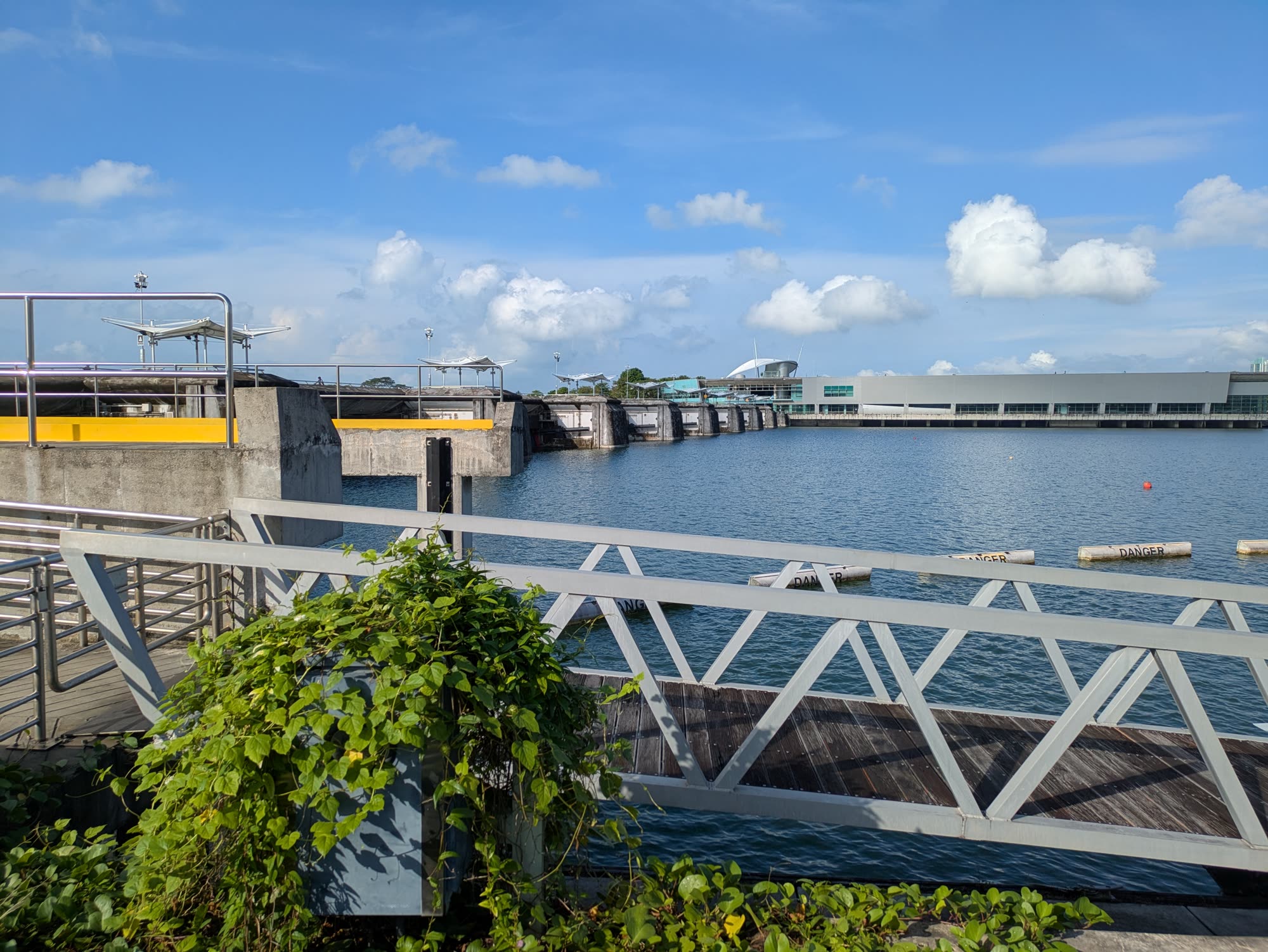
Marina Barrage and the End of Singapore's Water-Dependency Anxiety
A 350-metre dam sits across the mouth of the Marina Channel, nine steel gates and seven pumps standing between a freshwater reservoir and the open sea. It was finished in 2008, it created Singapore’s 15th reservoir, and today it is also the largest one on the island — built not on the fringes of the city but directly across the water from its skyline.

William Farquhar: The Co-Founder Singapore Wrote Out of Its Own Story
At the foot of Fort Canning Green sits a small garden planted with gambier, guava, wild nutmeg and rattan, each one framed like a picture — a deliberate echo of a set of watercolour drawings commissioned two centuries ago by the man the garden is named after. Almost nobody who walks through it could tell you who William Farquhar actually was.

The Bumboats and the River That Was Scrubbed Clean
For more than a century, the Singapore River was Singapore’s main cargo terminal, and it never had a proper dock. Ocean-going ships anchored out in the roads while flat-bottomed lighters — bumboats, twakows, tongkangs — ferried every sack, crate and barrel between them and the godowns lining the riverbank, load by load, by hand.

Whampoa: The Merchant Who Brought Singapore Its First Ice
Most Singaporeans know Whampoa as a place — a housing estate near Novena and Balestier, a hawker centre whose sign spells the name out in giant letters — not a person. Almost nobody connects it to Hoo Ah Kay, the 19th-century merchant behind it, who at various points supplied the Royal Navy, imported Singapore’s first ice, sat on the colonial Legislative Council, and served as honorary consul for three different empires at once.

The Nutmeg Estates That Became Orchard Road
Orchard Road today is glass towers, luxury malls and a mile of shop windows, one of the most expensive stretches of retail real estate in Asia. Its name is a leftover clue to something else entirely: in the 1830s and 40s this same ground was thick with actual orchards, planted by colonial speculators chasing a spice fortune that lasted barely a generation. Nutmeg was the biggest bet of all, and while the plantations themselves have vanished without a trace, the men who planted them are still on the street signs — Oxley, Cairnhill, Cuppage, Claymore, Scotts, Killiney. Singapore’s most expensive shopping street is, underneath its signage, a map of a spice that failed.

Before HDB: The Singapore Improvement Trust and Tiong Bahru
Walk around Tiong Bahru today and the rounded corners, curved balconies and porthole windows read as a heritage flex — a well-preserved pocket of 1930s Art Deco that estate agents now market as a lifestyle. Almost none of it was built to be charming. It was Singapore’s first public housing, built by a colonial body that no longer exists, to get people out of exactly the kind of overcrowded, disease-ridden slum that Tiong Bahru itself had once been.

Elizabeth Choy, the Canteen Operator Who Wouldn't Break
Cross the junction where Orchard Road meets Stamford Road, opposite the National Museum of Singapore, and there is a YMCA building with a red logo on its tower and buses idling outside. Almost nobody waiting there knows that the building on this exact spot was once the Kempeitai’s East District Branch, and that a schoolteacher named Elizabeth Choy spent roughly 200 days in a cell in it, tortured for information she never gave up.

The Causeway: A Kilometre of Road That Runs Two Ways
The Johor–Singapore Causeway has two rush hours, and they run in opposite directions. Before dawn, tens of thousands of Malaysians who live in Johor Bahru pour south across it to jobs in Singapore. On Friday nights and through the weekend the current reverses, as Singaporeans head the other way — not to work, but to fill their petrol tanks, buy groceries, see a dentist and have lunch, all at prices their own dollar buys far more of on the Malaysian side. It is one kilometre of road on a bank of rock, and the same currency gap is worked from both ends of it.

Assembled in Singapore: The Short Life of Local Car Plants
Since early 2023, Hyundai has been building electric cars in a seven-storey plant in the Jurong Innovation District — the first time cars have been assembled in Singapore in more than forty years. That gap is easy to read as the natural state of things: Singapore is small, has no car industry, taxes cars harder than almost anywhere on earth, and imports every one it drives. For about half a century, though, it did assemble them. The plants were never large and never lasted, and the last of them shut in 1980, but for a while “assembled in Singapore” was a label you could find on a new car.

The Rickshaw Men and the Jinricksha Station
At the corner of Neil Road and Tanjong Pagar Road stands a small, ornate building of exposed brick and white plaster, with an arched five-foot-way and a square corner tower capped by an octagonal dome. It is a wine bar, a restaurant and some offices now, and for a while the deed carried Jackie Chan’s name. It was built in 1903 for a single purpose: to register every rickshaw in Singapore and license the men who pulled them. At the peak there were close to thirty thousand rickshaws on the streets and perhaps fifty thousand men working the shafts in shifts, most of them used up within a few years. The building was preserved. The men left almost nothing.
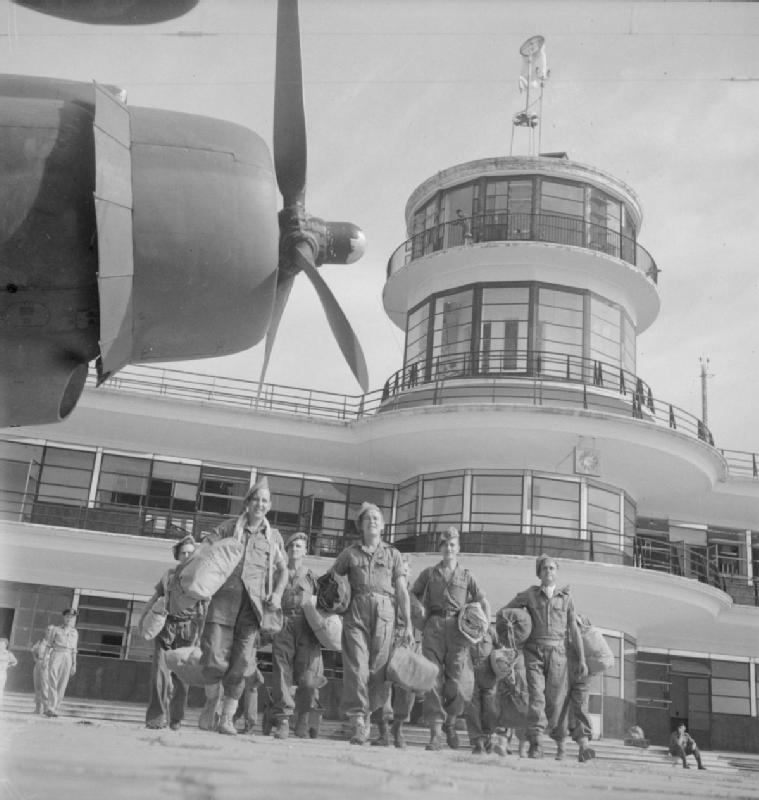
Kallang Airport, 'the finest airport in the British Empire'
On the north bank of the Kallang Basin, across the water from the Singapore Sports Hub, stands a low, curved building the colour of pale butter, with a round tower rising from its centre. Its address today is 9 Stadium Link, just off Nicoll Highway. Tens of thousands of people pass it every week on the way to a football match or a run along the promenade, and most of them have no idea what it is. For eighteen years it was the passenger terminal of Kallang Airport, Singapore’s first purpose-built civil aerodrome, described in its day as the finest in the British Empire and, by Amelia Earhart, as “an aviation miracle of the East.” The airport closed in 1955. The terminal is still there, still empty, still waiting for someone to decide what to do with it.

Coney Island, Before It Was a Nature Park
Coney Island in New York had a switchback railway, a Ferris wheel and a million visitors on a hot Sunday. Coney Island in Singapore has a locked gate, a gravel track and a sign asking cyclists to slow down for wildlife. The name travelled here in 1950, attached to a small island off Punggol that a businessman had just bought and meant to turn into a seaside playground. That plan failed, as did the ones before and after it. What finally opened to the public in 2015 was close to the opposite of a resort, and that was the point.

When Singapore Had Wild Tigers
By the middle of the 19th century, tigers in Singapore were rumoured to kill a person every day. Pressed on the subject in the House of Commons, the Governor of the Straits Settlements put the real figure at a still-alarming two hundred deaths a year, in a population of only fifty thousand. The last of those tigers was shot in 1930, at the edge of what is now Choa Chu Kang New Town. Wild animals never really left Singapore after that — they just got smaller, and mostly harmless. An otter family crossing the road in the middle of the financial district now gets a road sign of its own.

The Three Days Singapore's Stock Market Closed
On Monday, the 2nd of December 1985, the Stock Exchange of Singapore did not open for trading. Neither did the Kuala Lumpur Stock Exchange. Both stayed shut for three days — the only time Singapore’s market has ever closed completely. What forced it was a single company, Pan-Electric Industries, a refrigerator maker that had grown into a sprawling conglomerate, and a web of undisclosed contracts that had been propping up its share price. At the centre of it was Tan Koon Swan, a businessman who three weeks earlier had been elected leader of Malaysia’s main Chinese political party.

The Strip of Malaysia That Ran Through Singapore Until 2011
Until the middle of 2011, catching the train to Kuala Lumpur from the centre of Singapore involved something strange: you walked into Tanjong Pagar Railway Station, a few minutes from the banks of Shenton Way, and cleared Malaysian immigration. The station, its platforms and a ribbon of land running most of the length of the island were owned and run by Malaysia’s railway. For forty-six years after Singapore left the Federation, a strip of foreign-administered ground cut straight through the country.

When Singapore Led the World in Canned Pineapple
In 1912, ships leaving Singapore carried more than half a million cases of canned pineapple, and for the first decades of the twentieth century the island was the largest producer and exporter of canned pineapple in the world. The fruit is almost absent from the way Singapore tells its own economic story now, which tends to start with rubber, tin and the port. Yet pineapple came first. It filled some of the island’s earliest factories, and it seeded at least three of the largest Chinese business fortunes in the region — fortunes whose names are still attached to a town, a run of schools and universities, and a charitable foundation that is still giving money away today.
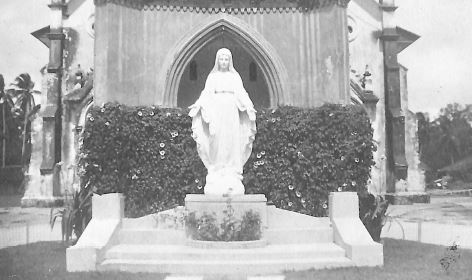
The Lane Was Probably Named After My School. Neither Is There Anymore.
I was born in 1960 on Jalan Payoh Lai, in what was then the Kangkar area of Hougang. Memory that old gets slippery, so I can’t be certain of every detail, but I remember walking to school and to church there for years afterward. The walk from the Upper Serangoon Road junction took about twenty minutes. My favourite shortcut ran along a backlane to the left of Montfort School called Holy Innocents’ Lane. I only learned recently, while researching this post, that the name traces back to a cluster of Catholic schools that once shared that stretch of Upper Serangoon Road. Montfort was one of them. Today, neither the lane nor the cemetery that once stood beside it appears on any map.

The Ointment Outlasted the Empire It Paid For
There is a fair chance that somewhere in your home, or on a shelf at the pharmacy nearest you, there is a small six-sided glass jar with a leaping tiger on the lid. Tiger Balm is sold in more than a hundred countries and turns up at a suburban American drugstore as readily as at a Singapore provision shop. Almost nobody who buys it knows that the jar is the last everyday trace of a fortune that once also ran a stable of newspapers and a bank, and paid for the hillside of painted concrete demons that Singaporeans know as Haw Par Villa.

How a Japanese Greengrocer Changed the Way Singapore Shops
When Yaohan opened at Plaza Singapura on 1 November 1974, it put a supermarket, a department store and a hall of ready-to-eat food under one roof, with fixed price tags on everything and staff who greeted shoppers at the door. Nothing in Singapore had worked quite like it. About a million people came through in the first week, in a country of 2.2 million. Half a century on, the stores that followed Yaohan in have mostly closed, and Yaohan itself no longer exists anywhere near Singapore — but the idea it arrived with, good food sold cheaply in the basement, has outlasted all of them.

The Bank That Spent a Century Teaching Singapore to Save
For a couple of generations of Singaporean schoolchildren, the first bank account was a small book filled a little at a time with ten-cent stamps, bought at the school bookshop and pasted into printed rows of squares. The stamps, the passbook, the queue in the school hall on collection day all belonged to the Post Office Savings Bank, an institution whose entire purpose, from 1877 onward, was to get ordinary people into the habit of putting money aside.

Singapore's National Symbols Were All Written on a Deadline
Singapore’s national anthem was not written for a nation. It was written for the reopening of a concert hall. That anthem, along with the flag flown outside every void deck and the pledge recited by every schoolchild, exists because two different governments needed something to point to on a tight deadline: once in 1959, when self-government arrived faster than anyone had planned for, and again in 1966, when a newly independent country was still absorbing the shock of race riots and an unwanted divorce from Malaysia.

The Japanese Garden That Reconciliation Built, Then Forgot
When the Japanese Garden in Jurong reopened in September 2024 after five years of redevelopment, the new attractions were a Water Lily Pavilion with over 150 varieties, a cenote-inspired Sunken Garden, and a “Breathing Gallery” of terrariums and aquariums. Nothing in the coverage of the relaunch explained why there was a Japanese garden at Jurong Lake in the first place. Fifty years earlier, its 1973 opening had nothing to do with water lilies — it was one of the more understated acts of postwar reconciliation between Singapore and the country whose army had occupied it only three decades before.

The Satay Club Moved Four Times. The Satay Stayed the Same.
I remember going to the Satay Club at the Esplanade as a kid — the waterfront version, under the big old trees, opposite Raffles Hotel. When I looked into it properly as an adult, I found that wasn’t where it started. The place moved four times before it finally closed for good, and the Esplanade — the version most people my age picture — wasn’t its first home.

The Japanese Soldiers Who Rebuilt Postwar Singapore Were Never Called Prisoners
In late January 1947, ten days into a strike by Singapore’s municipal labourers, the drains were choking in the monsoon rain and the men sent out to clear them were Japanese soldiers. They belonged to the army that had run the island until eighteen months earlier. The Straits Times ran a photograph of them at work under a caption that could not quite settle on what to call them: “Dismal Days For The POWs,” the word set in inverted commas. Officially they were not prisoners of war, and that distinction was the whole point.

He Wrote Singapore's Economics Textbook, Then Spent 30 Years Defying It
For decades, almost every Singaporean who sat for pre-university economics learned supply and demand from the same textbook: Elements of Economic Theory, first published in 1971 and reprinted through the 1980s as the standard A-Level and junior college text. Its lead author, Lim Chong Yah, taught a generation the clean logic of free markets. Then, for 30 years running Singapore’s actual wage-setting machinery, he spent much of his career deciding when that logic should be overruled.

The Vegetable Seller Behind Singapore's Most Recognisable Hospital Name
In 1819, the same year Stamford Raffles landed and declared Singapore a free port, a 21-year-old migrant from Malacca arrived with no money, no land, and no name that meant anything on this side of the strait. Tan Tock Seng sold vegetables and poultry off a cart to get by. By the time he died in 1850, he’d become wealthy enough to fund Singapore’s first hospital for the poor — a hospital that still operates today, under his name, at a fourth address he never saw.

The Shadow Tuition Economy: Singapore's $1.8 Billion Bet Against Its Own Meritocracy
The Ministry of Education has never made private tuition a requirement for anything. Officially, it doesn’t exist as part of the system at all — no school asks whether a student attends it, no policy assumes it. And yet Singaporean households spent S$1.8 billion on it in 2023, more than seven in ten students now receive some form of it, and it has quietly become the single largest discretionary expense in a typical Singaporean family’s education budget, ahead of enrichment classes, overseas trips, and everything else combined. A system built on the promise that merit alone decides who gets ahead has, almost by accident, let a shadow industry become one of the biggest levers on outcomes it never officially acknowledges.
The Ageism Gap: What Singapore Employers Say vs. What They Do
Somewhere in the CBD right now, a 61-year-old is putting together a resume for the first time in twenty years — not because she wants a hobby, but because her CPF payouts don’t quite stretch to cover the month, and re-employment at her old company runs out at 68. On paper, the system is built for exactly this: government messaging, tripartite guidelines, and a formal re-employment law all say older workers are welcome to keep working. In practice, a lot of resumes like hers go nowhere, and the reasons why rarely make it into any official statement.
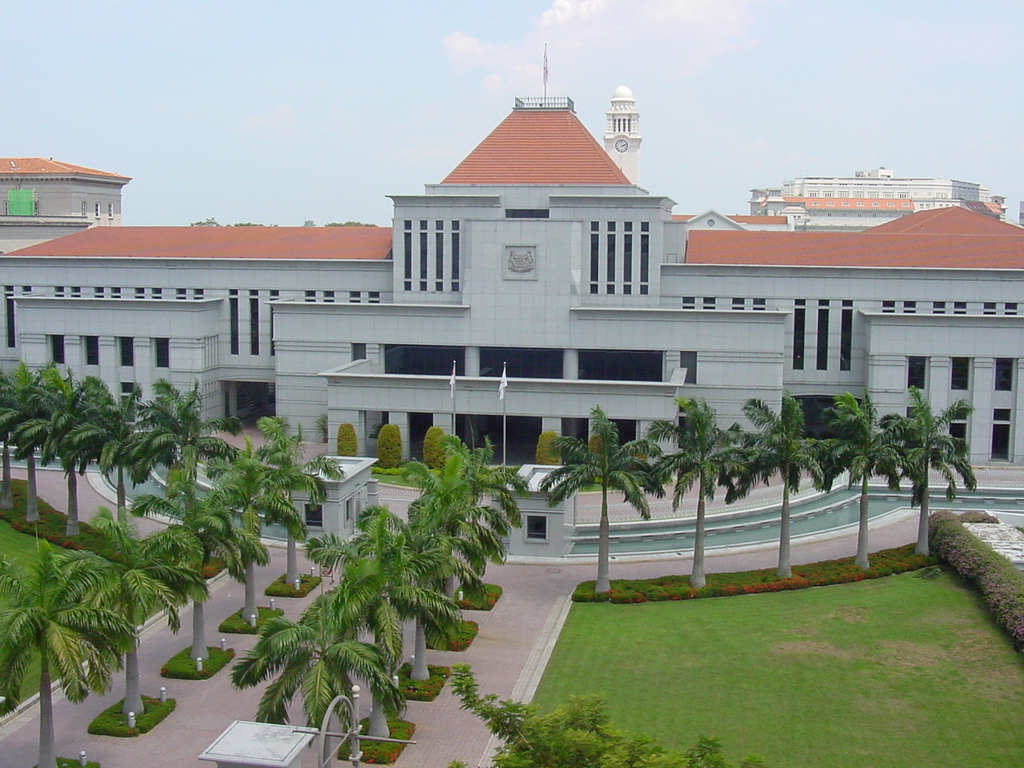
SkillsFuture at Ten: The Promise Still Outruns the Practice
At the end of 2025, a $500 credit that the government had handed to every Singaporean aged 25 and older quietly expired. It had been sitting in accounts since 2020, meant to nudge people into a course, a workshop, anything that counted as upskilling, before a deadline forced the decision. Roughly seven in ten eligible Singaporeans let it lapse unused. Weeks later, in January 2026, an MP was still asking Parliament whether the unclaimed money could at least be passed on to a family member — an elderly parent, say, or someone with a disability — before it disappeared back into the state’s books for good. The Ministry said no: SkillsFuture credits are not transferable, “including [to] immediate family members,” because the scheme is built around Singaporeans “taking ownership of their own lifelong learning journey.”

The Fine City's Fine Print: Which of Singapore's Famous Rules Still Stick
Earlier this year, a 43-year-old man named Tang Bo Xiang was fined S$2,500 and handed a 12-hour Corrective Work Order — cleaning public areas in a bright vest, in full view of passersby — for flicking a cigarette butt onto the ground. It was his 13th littering conviction since 2000. Nobody outside Singapore has ever built a joke around the littering law. The one everybody knows is the chewing gum ban, which — decades after it made international headlines — has actually gotten gentler with time. The rules people abroad think are Singapore’s strictest and the ones actually landing five-figure fines in 2026 turn out to be almost entirely different lists.

The Kampongs Under Tekong: What Every NS Recruit Marches Through Without Knowing
Every enlisted man in Singapore has spent his first weeks of National Service marching through training areas called Selabin, Permatang, and San Yong Kong, without ever being told what those names actually mean. They aren’t military codenames. They’re the names of kampongs — real villages, with real families — that stood on Pulau Tekong until the island was cleared for the Singapore Armed Forces. The only thing left of them today is the geography recruits train on, still labelled with names nobody explains.

Singapore 'Sold' Christmas Island in 1958 — Except It Never Owned It
Ask most Singaporeans about Christmas Island and you’ll get some version of the same story: Singapore used to own it, and sold it off to Australia in 1958 for far less than it was worth. It’s a tidy story — a small colonial outpost cashing in an island, a year before Singapore even got a real vote in its own affairs. It’s also wrong. Singapore never owned Christmas Island, so there was nothing for it to sell.

The Travel Bug: How Travelling Overseas Stopped Being Rare
For a lot of Singaporeans now in their 60s and 70s, going overseas was something that happened once or twice in a lifetime — a work posting, maybe a honeymoon, saved up for and planned around for months. Flying was priced for business travellers and the well-off, full-service and formal, the kind of trip you dressed up for. Today, the departure halls at Changi are full of people for whom none of that is true: students backpacking on a budget, retirees on their third cruise this year, whole families flying to Bangkok for a long weekend the way an earlier generation might have taken a bus to Malacca.

From Amah to Auntie: How Singapore Came to Rely on Foreign Domestic Workers
Before there were foreign domestic workers, there were amahs — Cantonese women, some of them majie who had taken vows never to marry, who ran Singaporean households through the mid-20th century. By the 1970s they were a vanishing breed: as female literacy rose from 27% in 1957 to over 60% by 1970, the young women who might once have gone into domestic service were going into factories and offices instead. Singapore’s households still needed the help. It just had to come from somewhere else.

A Typical Day for Singapore's Silver Generation
For many Singaporeans now in their 80s, the day starts early — not out of habit, but because that’s when the shuttle to the nearest Active Ageing Centre picks up. A quick blood-pressure check, a subsidised breakfast, maybe a round of Rummy-O or a stretching class before the heat sets in. Some still work a few hours a day, clearing tables or wiping counters at the neighbourhood hawker centre. It’s an unremarkable morning, and that’s rather the point: for a generation that spent decades without much of a safety net, an unremarkable morning is a small daily win.

The Doctor Who Shrank Singapore's Families, Then Became Its President
In 1969, Singapore’s Parliament passed the Voluntary Sterilisation Act without a single vote against it — a law that would go on to help engineer one of the steepest fertility declines any country has seen in peacetime. It wasn’t pushed through by a career politician. It was pushed through by a working obstetrician who, two years later, would be tapped by Lee Kuan Yew to become Singapore’s second president — a job most people since have treated as ceremonial, a name and a signature, with no real memory of the population engineering he’d already done before he ever moved into the Istana.

The $2.70 Fishball Noodle That Exposed Singapore's Hawker Rent Gap
In July 2015, a 24-year-old hawker named Douglas Ng went to a tender briefing for a new government-run hawker centre in Bukit Panjang and came away furious. His handmade fishball noodles, he was told, had to sell for a minimum of $2.70. A stall selling pasta at the same centre could charge a minimum of $5.80. Ng did the math out loud on Facebook: at $2.70 a bowl, after ingredients and labour, he was clearing about fifty cents of profit.

Dear You and the Dialect Singapore Spent 45 Years Trying to Retire
A lot of Singaporeans in their 40s and 50s can understand Teochew — enough to follow a grandmother’s stories, or catch the gist of a hawker’s banter — without being able to hold a real conversation in it. That gap between hearing and speaking isn’t an accident. It’s the direct, measurable result of a language policy that started in 1979 and largely succeeded. Which is what made it strange, this year, to watch a Teochew-language film called Dear You sell out its original-dialect screenings in Singapore faster than the Mandarin-dubbed version everyone expected to dominate.

Japan's Quiet Hand in Building Jurong
In 1963, on reclaimed mudflats west of the city, Bridgestone broke ground on its first factory outside Japan — not in a friendly, familiar market, but in Singapore, barely eighteen years after Japanese troops had occupied the island and four years before Tokyo agreed to pay for it.

The World-Famous Nightlife Strip Singapore Bulldozed for an MRT Station
On a good night in the 1970s, Bugis Street didn’t quiet down until sunrise. Hawker stalls served fried noodles and cheap beer at rickety open-air tables, American sailors on leave from Vietnam mixed with British servicemen who’d nicknamed the place “Boogie Street,” and after 11pm the crowd waited for the real spectacle: thirty or forty transgender women who gathered nightly to perform, pose for photos with tourists, and outshine everyone else on the strip. Newsweek wrote it up. Guidebooks called it unmissable. In October 1985, with little fanfare, Singapore bulldozed the whole street.

The Largest Japanese Cemetery in Southeast Asia Began as a Grave for Trafficked Women
Walk into the Japanese Cemetery Park in Hougang today and the oldest graves aren’t soldiers or merchants — they belong to Japanese women trafficked into Singapore’s brothels a century and a half ago. The cemetery holds 910 tombstones, and by most accounts close to half of them mark the graves of karayuki-san: girls sold or lured out of impoverished Japanese fishing villages, shipped to Singapore, and put to work on the same streets — Bugis, Malay, Hylam and Malabar — covered in an earlier post about Bugis Street. The cemetery’s own founding is stranger still: it exists because a brothel keeper paid for it.

The Concert Hall That Was Once a Courtroom for Hanging Men
Every week, concertgoers file into Victoria Concert Hall to hear the Singapore Symphony Orchestra, mostly unaware that the same room once served as a stage for Japanese wartime propaganda, and then, within two years, as the courtroom where Japanese officers were sentenced to hang. It has been rebuilt, renamed, and rebranded more times than almost any other building in Singapore — and every time, it has gone back to being a place for culture, as if nothing else had ever happened inside it.

Syonan Jinja: The Forest Shrine the Japanese Army Burned Down on the Day It Surrendered
On 15 August 1945 — the day Emperor Hirohito’s broadcast ended the Pacific War — retreating Japanese soldiers in Singapore did something specific with their last hours in charge: they set fire to their own shrine. Syonan Jinja, deep in the forest at MacRitchie Reservoir, had been built by thousands of Allied prisoners of war to be the grandest Shinto shrine anywhere in occupied Asia outside Tokyo. Its builders burned it rather than let the returning British see it standing.

Tortured by the Kempeitai, He Went On to Build a Nation's Homes
Sometime during the Japanese Occupation of Singapore, the Kempeitai picked up a young Peranakan businessman named Lim Kim San — not once, but twice — and tortured him on the strength of two accusations that couldn’t both be true: that he was a communist, and that he was a British sympathiser. Two decades later, that same man would be the one Singaporeans called “Mr HDB,” credited with solving the housing crisis of a newly independent nation. Almost nobody remembers the part in between.

The Two Men Behind Singapore's Most Photographed Statue
Millions of people photograph the Merlion every year, and almost none of them could name the men who made it. That is not a knock on the tourists. Singapore itself has done a poor job remembering: the lion-headed, fish-tailed statue at Marina Bay is arguably the single most recognisable image the country has ever produced, more instantly “Singapore” in a photo than the flag or the skyline, and yet the two people responsible for it, a British fish expert and a self-taught local sculptor, both died within a year of each other in the late 1980s without much public notice.

The Bunker Under Fort Canning Hill
Beneath Fort Canning Hill, a quiet green space in the middle of the city, sits a concrete bunker most visitors to the park above never notice. Known as the Battlebox, it was once the underground command centre for the British Malaya Command, and it’s roughly the size of three basketball courts, buried entirely out of sight.

National Service Moved to an Island. The Salute Stayed the Same.
I did my National Service the way a lot of Singaporean men my age did: reported to CMPB, got sent to SAFTI for Basic Military Training, was housed there, and trained on the slopes of Peng Kang Hill. Recruits today go through more or less the same rite of passage, but almost none of it happens in the places I remember — BMT has been on Pulau Tekong for decades, and even CMPB itself has since moved.

The Four Chopsticks and the Blood Debt: How Singapore Made Peace With Japan
Commuters passing Esplanade MRT station walk beneath four tapering white columns that locals have nicknamed the “four chopsticks” for as long as most of them can remember, without necessarily knowing what the monument actually marks. Underneath it are the remains of more than 600 people, recovered from mass graves found around the island in 1962 — victims of a massacre that Singapore and Japan spent the following decades finding an uneasy but lasting way to live with.

How Group Chats Rebuilt the Kampong for Singapore's Seniors
Somewhere in Singapore right now, a 78-year-old is checking a family WhatsApp group before breakfast, sending a good-morning sticker to a chat of ex-colleagues, or reading updates from her Active Ageing Centre’s exercise group — quietly maintaining a social circle that, a decade ago, would have shrunk along with her mobility. It’s an unglamorous kind of connection, but it’s doing real work: a government push to get seniors online has ended up rebuilding something closer to old kampong-style closeness than anyone quite planned for.
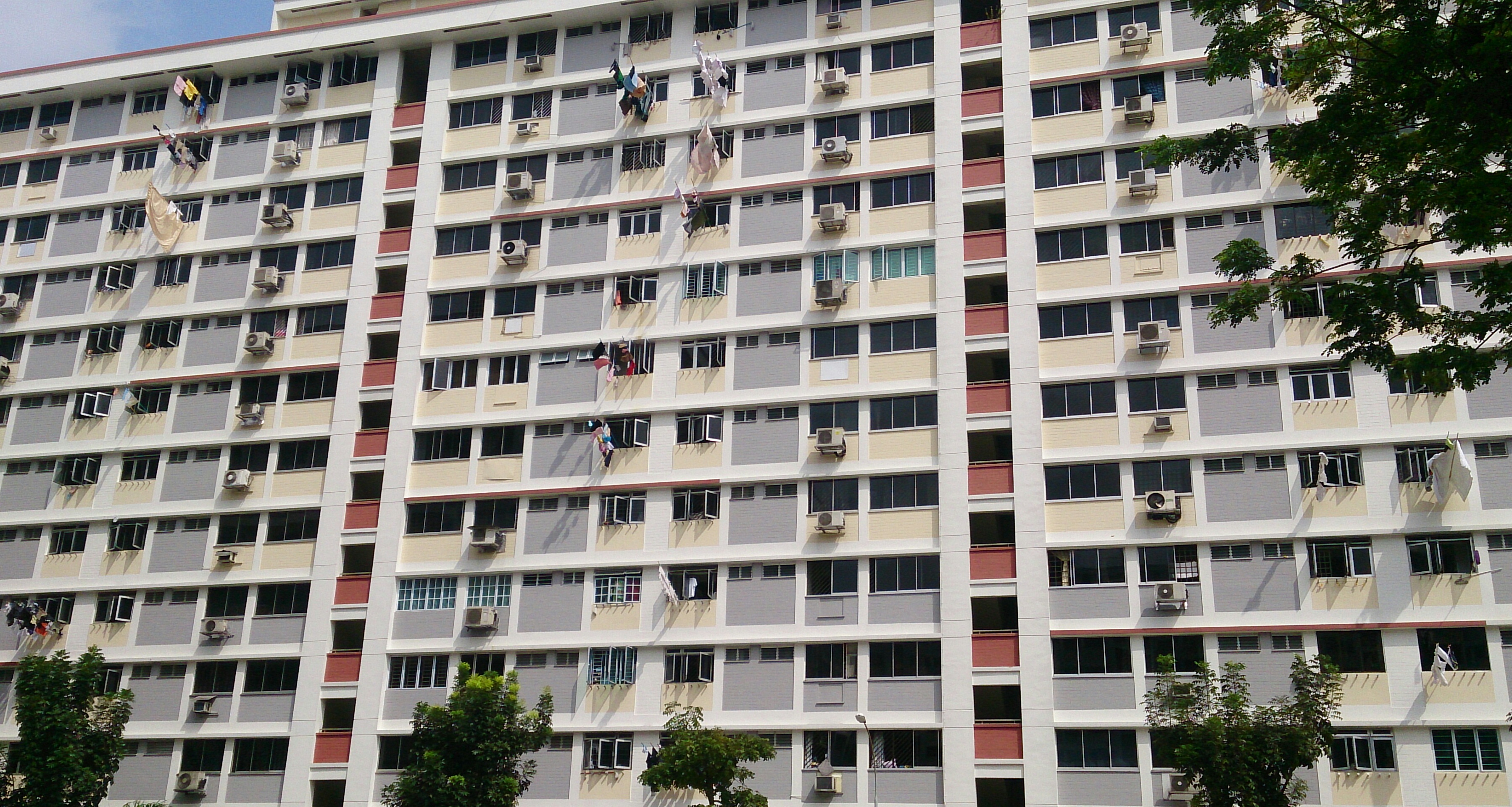
What a Square Foot of HDB Flat Has Cost, 1990–2026
A four-room HDB resale flat today goes for roughly $662 a square foot — for an 807 sqft unit, that’s north of half a million dollars before you’ve even picked a floor. In 1990, the same square foot cost about $80. Most of the last thirty-five years of Singapore’s economic history is hiding somewhere in the distance between those two numbers.
subscribe via RSS