Coney Island, Before It Was a Nature Park
Coney Island in New York had a switchback railway, a Ferris wheel and a million visitors on a hot Sunday. Coney Island in Singapore has a locked gate, a gravel track and a sign asking cyclists to slow down for wildlife. The name travelled here in 1950, attached to a small island off Punggol that a businessman had just bought and meant to turn into a seaside playground. That plan failed, as did the ones before and after it. What finally opened to the public in 2015 was close to the opposite of a resort, and that was the point.

The western entrance to Coney Island Park. Photo by Jnzl, CC BY 2.0, via Wikimedia Commons.

From Pulau Serangoon to a rich man’s beach
 Aw Boon Haw, from the 1931 directory Who's Who in China. Public domain, via Wikimedia Commons.

The island’s older name is Pulau Serangoon, and for most of its history it was a thin, wooded strip of land off the Punggol coast with nothing much on it. That changed in 1937, when Aw Boon Haw bought it. He and his brother Aw Boon Par had built the Tiger Balm fortune, and Aw Boon Haw put a beach villa on the island: a single-storey house of about 600 square metres in the modern style of the day, with a central hall, an open verandah running around it and its own well for fresh water. The design is usually attributed to Ho Kwong Yew, one of the architects then bringing a plainer, flat-roofed look to Singapore. Locals stopped calling the place Pulau Serangoon and started calling it Haw Par Island.
The villa did not last long as a retreat. The Japanese Occupation damaged it along with much of the Aw family’s property, and after the war Aw Boon Haw sold the island on.
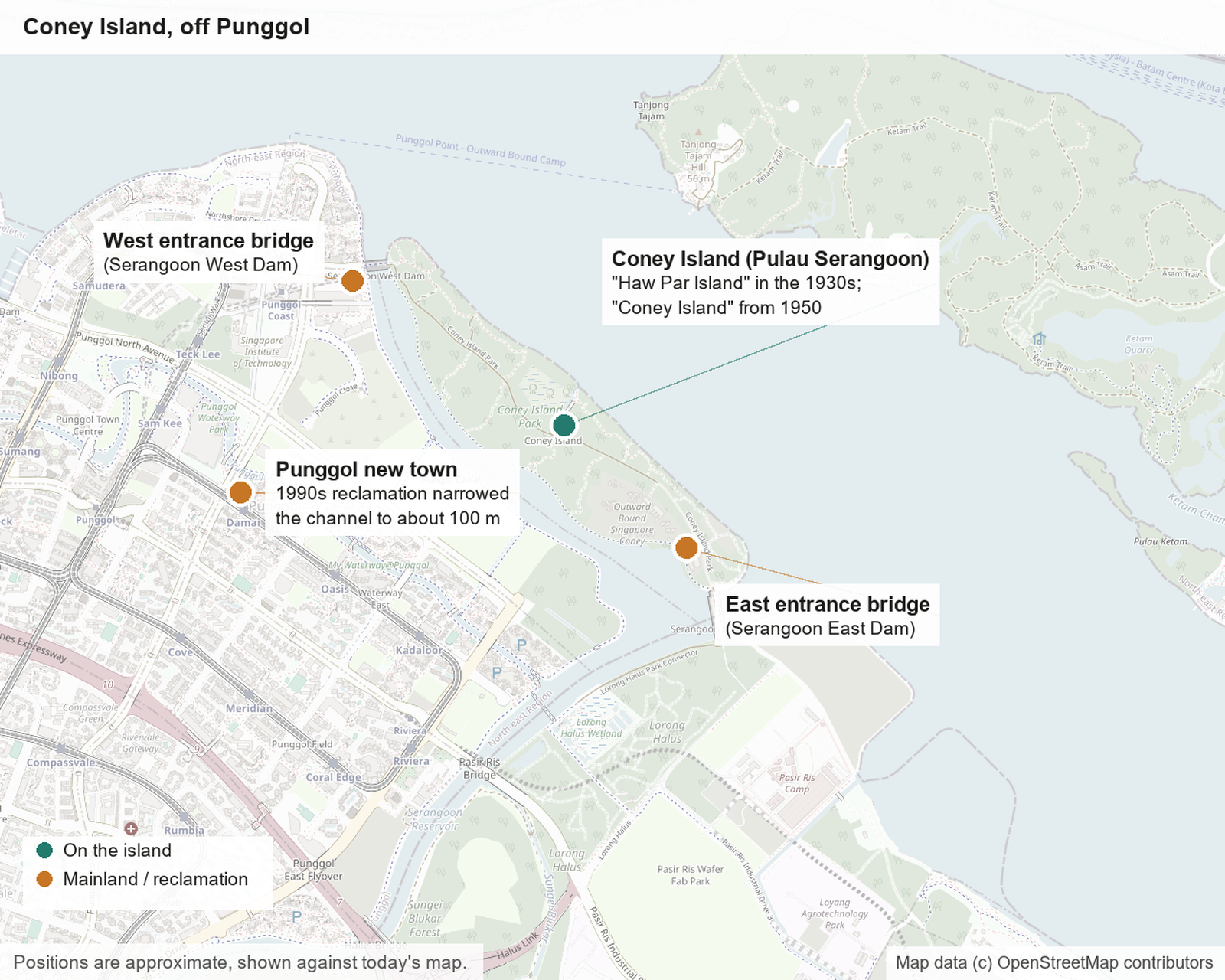
The island sits a short bridge from Punggol at each end. Map by Lesser Known Singapore; base map data © OpenStreetMap contributors.
The resort that never came

Luna Park, Coney Island, New York, around 1905 — the amusement district the Singapore island was named after. Photograph by the Detroit Publishing Co.; Library of Congress, public domain, via Wikimedia Commons.

The buyer, in 1950, was a local businessman named Ghulam Mahmood. He paid around $100,000 and announced that he would remake the island as a holiday resort for ordinary working families: swimming, boating and fishing, a skating rink, a dance hall, a restaurant and bar, and a handful of cottages for honeymooners. He renamed it Coney Island, after the New York amusement district, and advertised it as Singapore’s first island health resort. For a while it ran, with launches crossing every half hour and a house band billed as the Coney Island Band.
It did not take. Within about three years the island was up for auction. A succession of owners followed, none of whom found a way to make the resort idea work, and by the early 1970s the island belonged to a businessman from Thailand who was trying, without success, to sell it for a million dollars.
A group of us went out to the island once during our national service, around 1979. It was well before any of this was a park, or even a name most people knew. The place was overgrown and completely quiet, with a low building coming apart among the trees and a beach full of driftwood. Nobody stopped us, because there was nobody there to stop us.
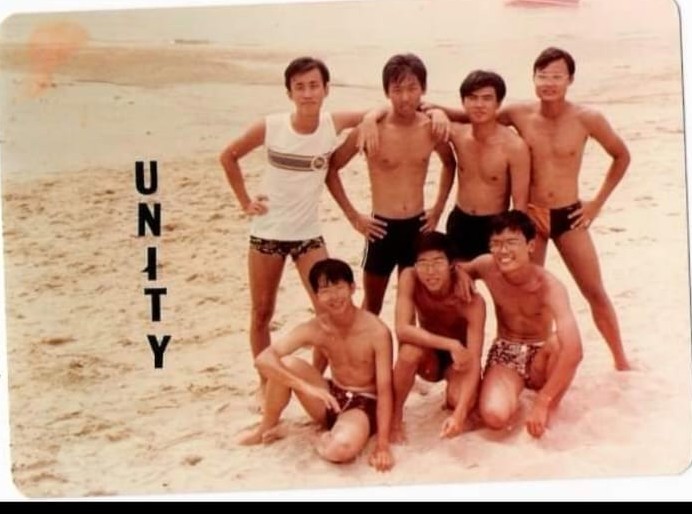
Group of friends on the island, 1979. From Paul Kang’s collection.
The state takes over
The government acquired Coney Island in 1972. Two years later the Port of Singapore Authority began a reclamation project costing about $20 million, which enlarged the small original island several times over and built a bridge across to the mainland. A second round of filling came in the 1990s, this time as part of Punggol new town, and it closed most of the water between the island and Punggol, leaving a channel only about a hundred metres wide. There had been a proposal in the 1980s to close that last gap as well and fold the island into the mainland outright. It was dropped after objections that joining it on would take away the very thing that made it worth keeping.
For most of these decades the island was simply shut. It was fenced off, absent from the bus map, used for grazing cattle and for little else.
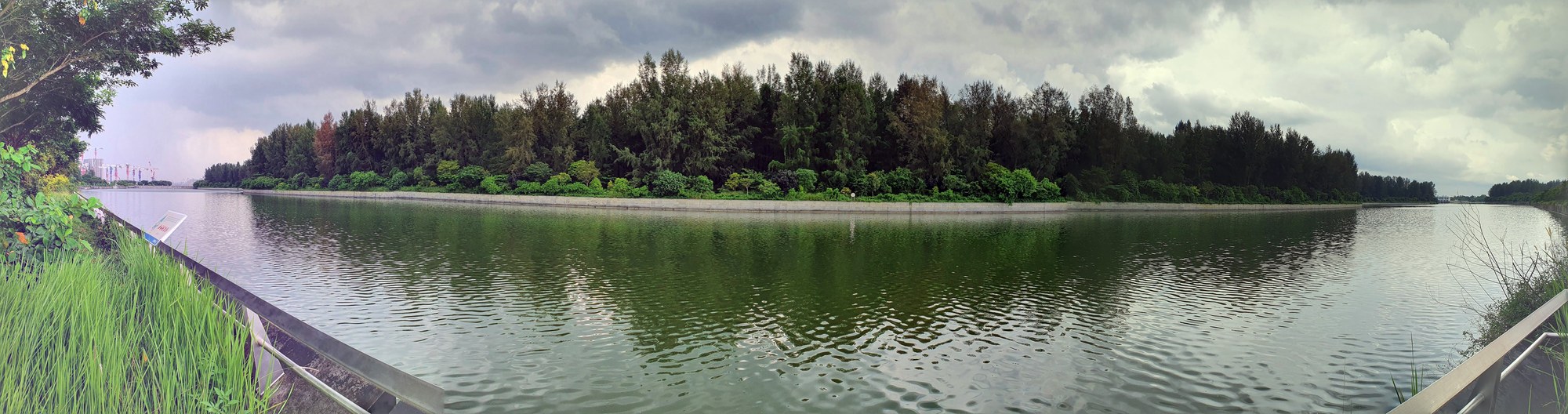
Coney Island across Serangoon Reservoir, from the Punggol Promenade, 2022. Author’s photograph.
A park that refuses to be a resort
 Smooth-coated otters at the Coney Island west causeway, 2024. Photo by Jnzl's Photos, CC BY 2.0, via Wikimedia Commons.

Coney Island Park opened on 10 October 2015, run by the National Parks Board, at about 50 hectares. The design is deliberately spare. There are five short stretches of beach, labelled A to E, a gravel spine a little over two kilometres long, and boardwalks over the wetter ground. There is almost nothing to buy, the toilets compost rather than flush, and the lighting is kept low. Much of the tree cover is casuarina, some of it self-sown from seed carried in by birds, and about eighty bird species have been recorded on the island.
In the park’s first year a single Brahman bull, thought to be a leftover from the cattle that once grazed there, wandered the tracks and drew a small following of photographers. It died in October 2016, during a health check, and the BBC gave it an obituary headlined “the life and death of a lonely Singapore cow.” The Haw Par villa is still standing, roofless and fenced off, back among the trees near the shore. The otters, the wild pigs and the birds arrived on their own.
The irony is not hidden. For sixty years people tried to sell this island as somewhere to have fun, as a beach club, a fairground, a honeymoon spot, and none of it held. The version that finally worked is the one that asks nothing of visitors and sells them nothing at all.
Where it fits in the bigger story: A fair amount of what looks like leftover nature in Singapore is nothing of the kind. Coney Island is larger than it was born, tied to the shore by reclaimed land, planted up, and presented as wilderness in large part because the earlier and more commercial ideas for it fell through. The rough edges are a decision, not an accident.
Sources:
- Coney Island (Pulau Serangoon), Singapore Infopedia, National Library Board
- Coney Island, SG101, Nexus (MINDEF)
- Coney Island and the Forgotten Haw Par Beach Villa, Remember Singapore
- Coney Island, Singapore, Wikipedia
- Punggol reclamation, Singapore Infopedia, National Library Board
- Death of Coney Island Cow, media release, National Parks Board, October 2016
- “Coney Island: The life and death of a lonely Singapore cow”, BBC News, October 2016
- Photograph of a group of friends on the island, 1979, from Paul Kang’s collection
- “Night in Luna Park, Coney Island” by the Detroit Publishing Co. (c. 1905), Library of Congress, public domain, via Wikimedia Commons
- Portrait of Aw Boon Haw from Who’s Who in China (1931), public domain, via Wikimedia Commons
- Photograph of the Coney Island gate by Jnzl, CC BY 2.0, via Wikimedia Commons
- Panorama of Coney Island from the Punggol Promenade, 2022, photograph by the author
- Photograph of smooth-coated otters at the west causeway by Jnzl’s Photos, CC BY 2.0, via Wikimedia Commons
- Base map data © OpenStreetMap contributors