More Historical Photos: The $50 Million 'Gift'
More images of the people, places and money connected with the $50 million “gift” of 1942.
Lim Boon Keng in 1929

Lim Boon Keng as president of Amoy University, from a university commemorative publication of 1929. (Amoy University commemorative publication, public domain, via Wikimedia Commons)
Where the association was formed

The Singapore Chinese Chamber of Commerce and Industry on Hill Street in 2006. The Oversea Chinese Association was formed at the Chamber’s earlier building on this site on 2 March 1942. (Sengkang, copyrighted free use, via Wikimedia Commons)
General Yamashita

General Tomoyuki Yamashita, who received the $50 million cheque on 25 June 1942. (Unknown Japanese Army photographer, public domain, via Wikimedia Commons)
The Malayan campaign, 1941
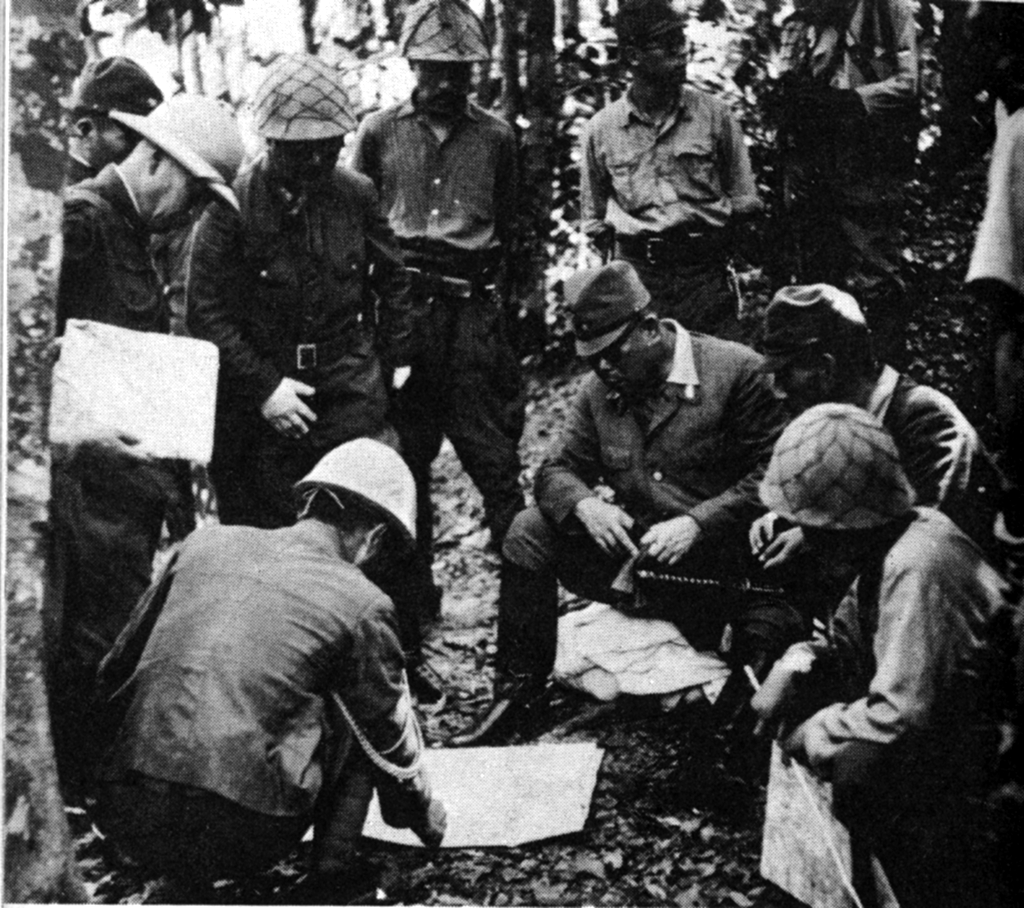
Yamashita with his officers during the invasion of Malaya, December 1941. (Unknown photographer, Japanese war history office, public domain, via Wikimedia Commons)
Stamps for the fall of Singapore

Japanese stamps issued in 1942 to mark the fall of Singapore. (Japanese Ministry of Communications, public domain, via Wikimedia Commons)
Syonan-to on the map

A Japanese map of Singapore, renamed Syonan-to, dated 12 October 1942. (Magyer Lohasa, CC BY-SA 4.0, via Wikimedia Commons)
The first anniversary of the Occupation

A gathering in the Asia Raya theatre in Singapore to mark the first anniversary of the Occupation, from the Japanese propaganda magazine Djawa Baroe, 1 March 1943. (Unknown photographer, public domain, via Wikimedia Commons)
A victory parade in Syonan

A procession in Singapore described as a “celebration” of Japanese victory, from Djawa Baroe, 1 April 1943. (Unknown photographer, public domain, via Wikimedia Commons)
Occupation money: five dollars

A five-dollar note issued by the Japanese government for Malaya in 1942. (National Museum of American History, public domain, via Wikimedia Commons)
Occupation money: one hundred dollars

A hundred-dollar note issued in 1944, as the occupation currency lost its value. (National Museum of American History, public domain, via Wikimedia Commons)
Occupation money: one thousand dollars

A thousand-dollar note issued in 1945, the largest denomination of the occupation currency in Malaya. (National Museum of American History, public domain, via Wikimedia Commons)
The war crimes trials, 1946

Japanese defendants in the dock of the Supreme Court in Singapore at the start of a war crimes trial, 21 January 1946. Shinozaki later gave evidence at the trials. (Pilot Officer Vasey, Royal Air Force official photographer, public domain, via Wikimedia Commons)
Lim Boon Keng’s grave

The gravestone of Lim Boon Keng, who died on 1 January 1957, and his second wife Grace Pek Ha Yin, at Bidadari Garden, in 2012. (Smuconlaw, CC BY-SA 3.0, via Wikimedia Commons)