More Historical Photos: The Occupation's Savings Drives
← Back to “Saving for the Emperor: The Occupation's Post Office Savings Drives, 1942–45”
More newspaper pages, stamps and pictures from the savings drives of 1942 to 1945, and from what happened to the deposits afterwards.
The first million, August 1943
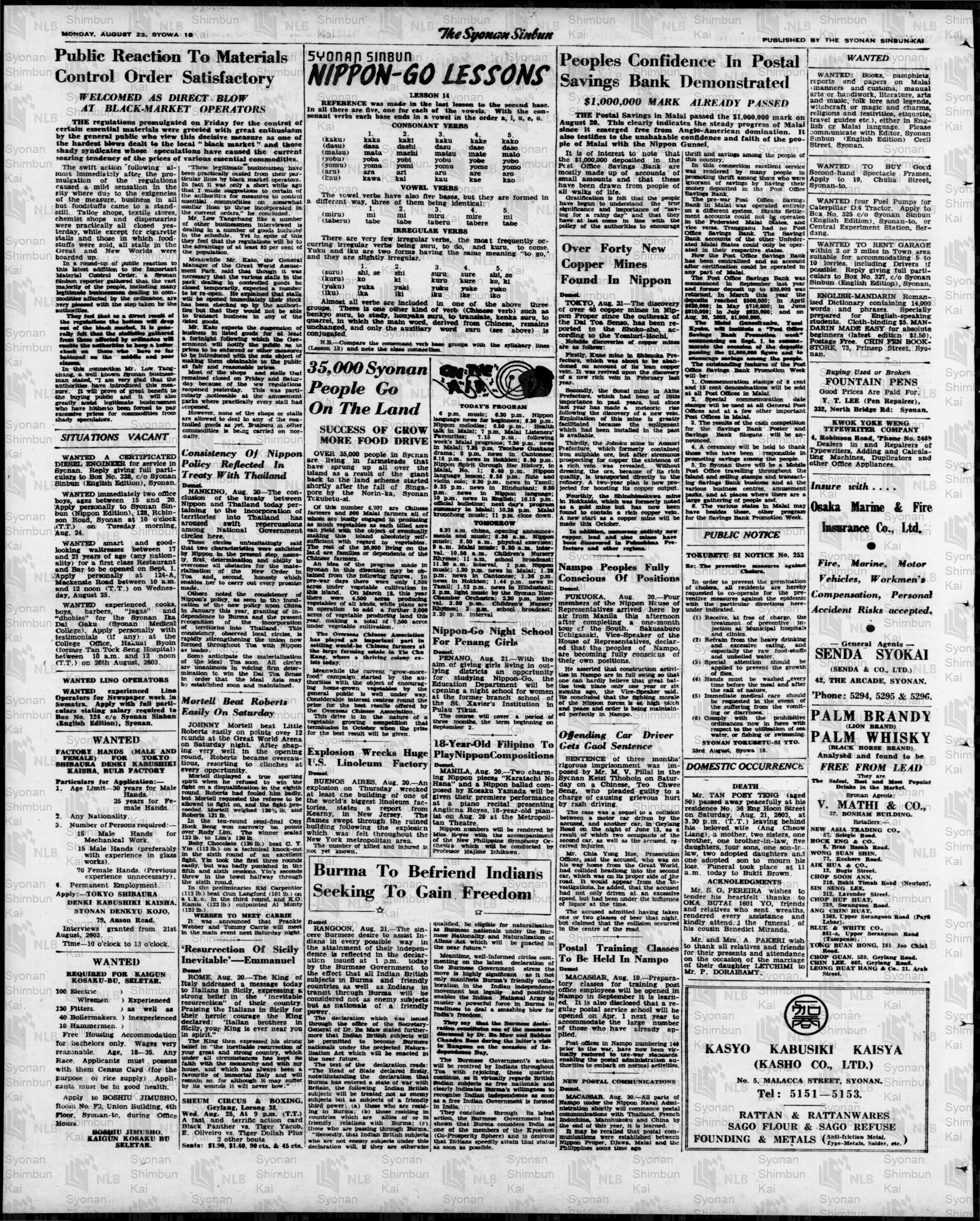
The Syonan Shimbun of 23 August 1943, page 2. The report near the top right, “Peoples Confidence In Postal Savings Bank Demonstrated”, announces that postal savings in Malaya had passed $1 million and sets out the first Post Office Savings Bank Promotion Week. (The Syonan Shimbun, via NewspaperSG, National Library Board Singapore, public domain)
A prize for every $100, February 1944
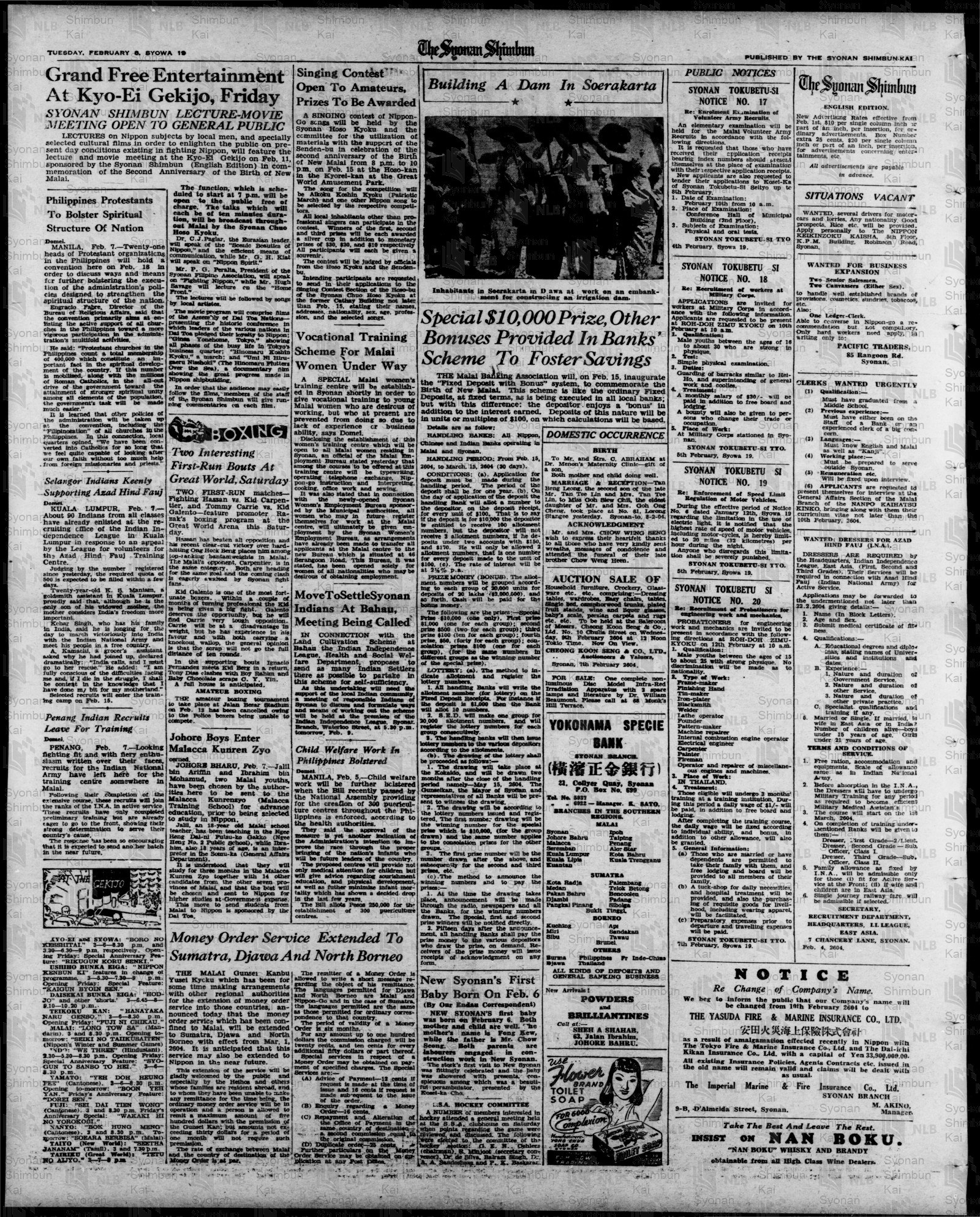
The Syonan Shimbun of 8 February 1944, page 2. The item at the right, “Special $10,000 Prize, Other Bonuses Provided In Banks’ Scheme To Foster Savings”, sets out the Malai Banking Association’s first “Fixed Deposit with Bonus” scheme. (The Syonan Shimbun, via NewspaperSG, National Library Board Singapore, public domain)
A savings week for the “Birth of New Malai”, February 1944
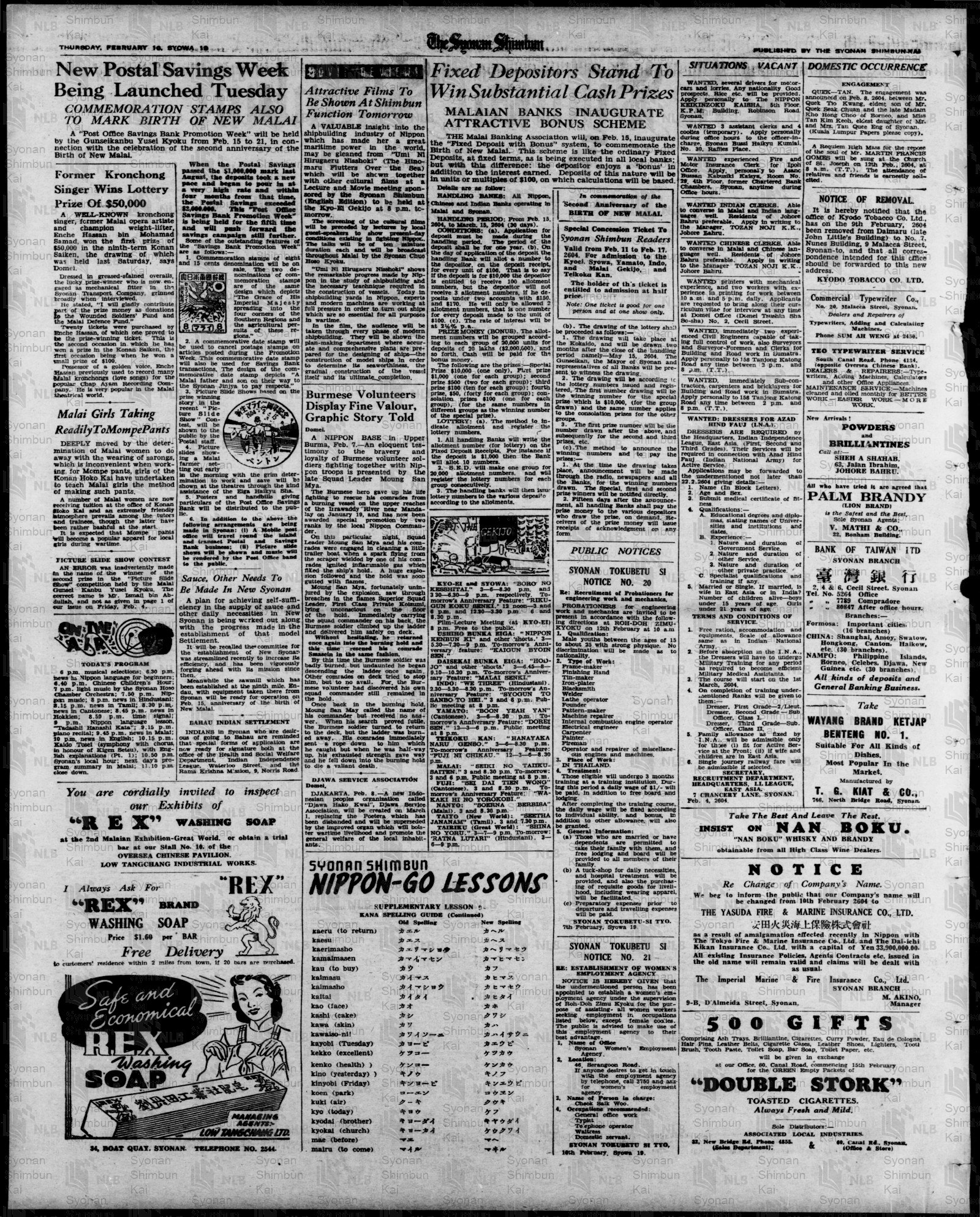
The Syonan Shimbun of 10 February 1944, page 2. The report at the top left, “New Postal Savings Week Being Launched Tuesday”, shows the commemorative 8-cent stamp and the date stamp of a father and son walking to the Syonan Jinja. (The Syonan Shimbun, via NewspaperSG, National Library Board Singapore, public domain)
Half a million depositors, July 1945
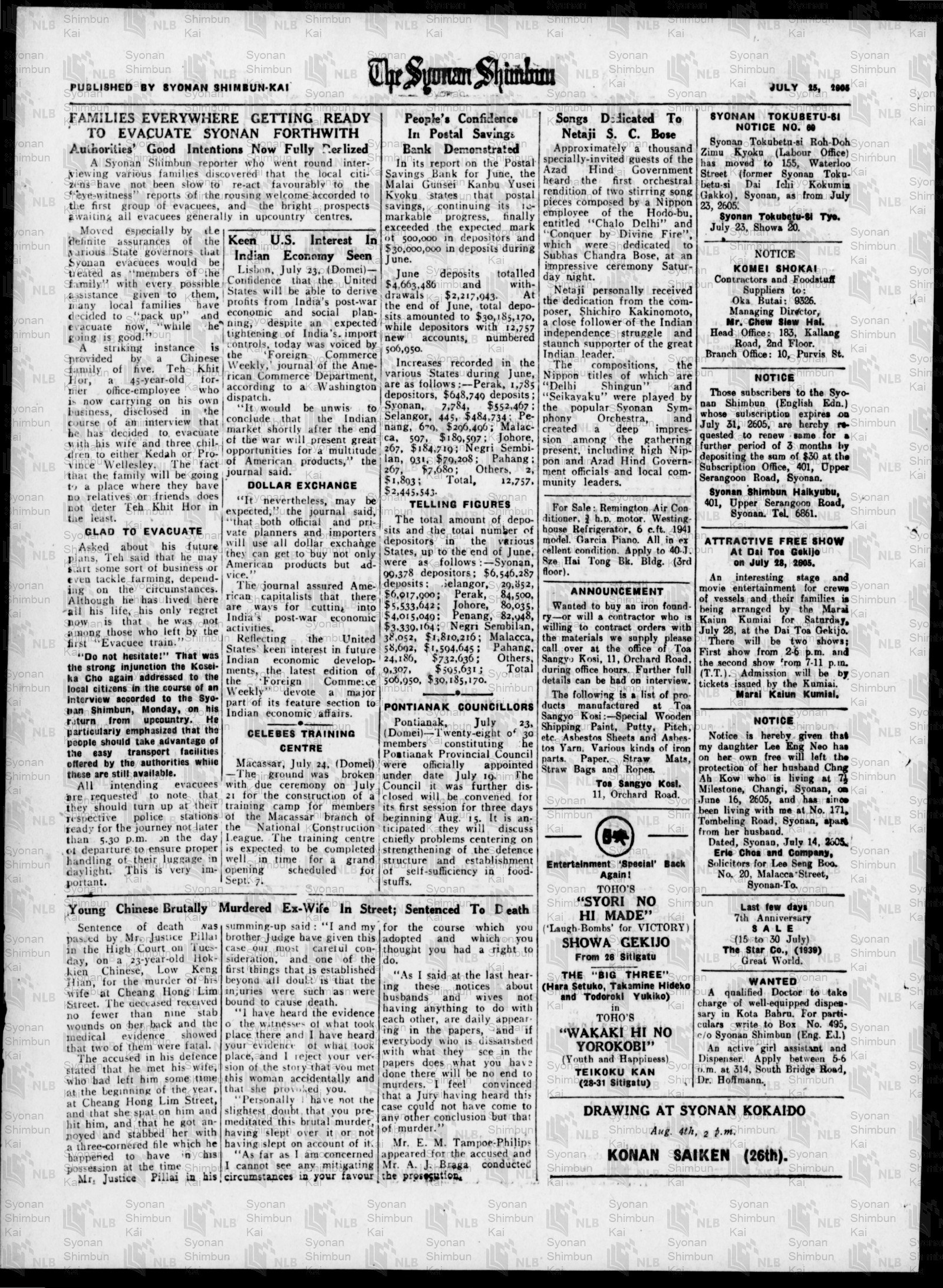
The Syonan Shimbun of 25 July 1945, page 2, three weeks before the surrender. Its report on the savings bank’s June figures gives the totals at the end of June 1945: $30.2 million in deposits and 506,950 depositors across Malaya. (The Syonan Shimbun, via NewspaperSG, National Library Board Singapore, public domain)
The savings bank reopens, October 1945
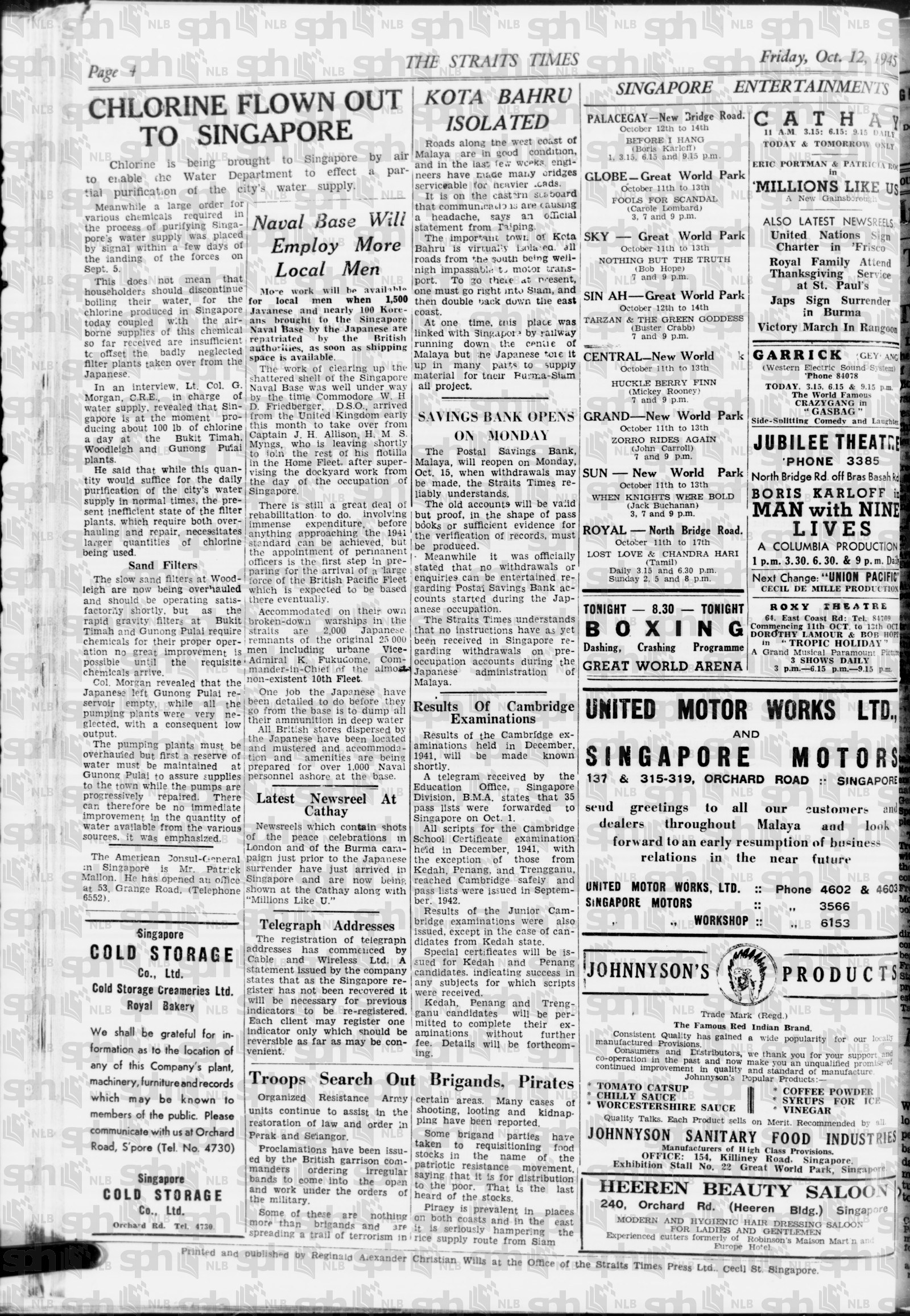
The Straits Times of 12 October 1945, page 4. The short item “Savings Bank Opens On Monday”, in the middle column, says that no withdrawals or enquiries could be entertained for accounts started during the Japanese occupation. (Singapore Press Holdings, via NewspaperSG, National Library Board Singapore, public domain)
Revalued claims, May 1951
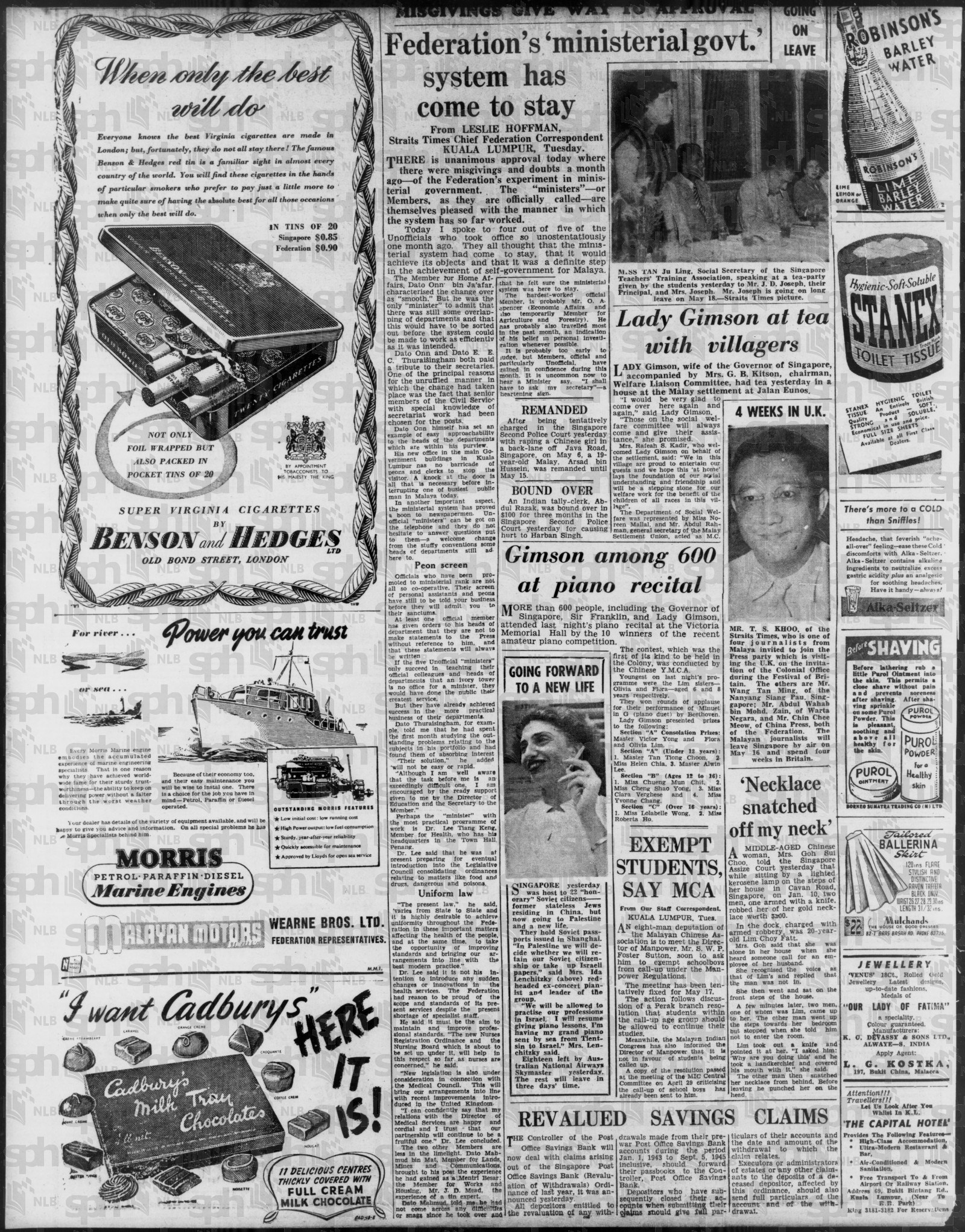
The Straits Times of 9 May 1951, page 4. The short item “Revalued Savings Claims”, near the bottom, tells depositors how to claim the revaluation of withdrawals made from their pre-war accounts between 1943 and 1945. (Singapore Press Holdings, via NewspaperSG, National Library Board Singapore, public domain)
A rubber tapper, 1943

A 3-cent stamp of the 1943 issue for occupied Malaya, showing a rubber tapper. (Japanese military administration, scanned by Stan Shebs, public domain, via Wikimedia Commons)
A 4-cent stamp, 1943

A 4-cent stamp of the same 1943 issue. (Japanese military administration, public domain, via Wikimedia Commons)
The Syonan Jinja on a stamp

A 15-cent stamp showing the Syonan Jinja, the shrine that also appeared on the savings week date stamp of February 1944. (Japanese military administration, public domain, via Wikimedia Commons)
The fall of Singapore stamps, 1942

Japan’s stamps marking the fall of Singapore in 1942, sold with a surcharge of 1 and 2 sen. The anniversary of the fall, which the administration called the “Birth of New Malai”, was used to launch savings drives in February 1944 and February 1945. (Ministry of Communications, Japan, public domain, via Wikimedia Commons)
“Dai Nippon 2602”

Pre-war Malayan revenue stamps overprinted “Dai Nippon 2602”, the Japanese calendar year for 1942, and used during the Occupation. (Revenue Department of Malaya, public domain, via Wikimedia Commons)
A $10 note

A $10 note of the occupation currency, the money in which every wartime deposit was made. (Japanese Government, photographed by Auckland War Memorial Museum, CC BY 4.0, via Wikimedia Commons)
A street in Syonan, 1943

A street in Syonan with shop signs in Japanese and Chinese, February 1943. (Unknown author, public domain, via Wikimedia Commons)
Rationed rice

A ration card for extra rice issued in Syonan in late 1944, at the time the savings drives were urging people to cut their spending. (Syonan Bussi Haikyu Kumiai, photographed by Zenwort, public domain, via Wikimedia Commons)
← Back to “Saving for the Emperor: The Occupation's Post Office Savings Drives, 1942–45”