More Historical Photos: Lien Ying Chow and Overseas Union Bank
← Back to “Lien Ying Chow, the Banker Who Escaped to Chongqing”
More images of the places and people in Lien Ying Chow’s story, from Hong Kong in the 1920s and wartime Chongqing to the bank’s opening in 1949 and the hotel he built.
The Sunday Times, 6 February 1949
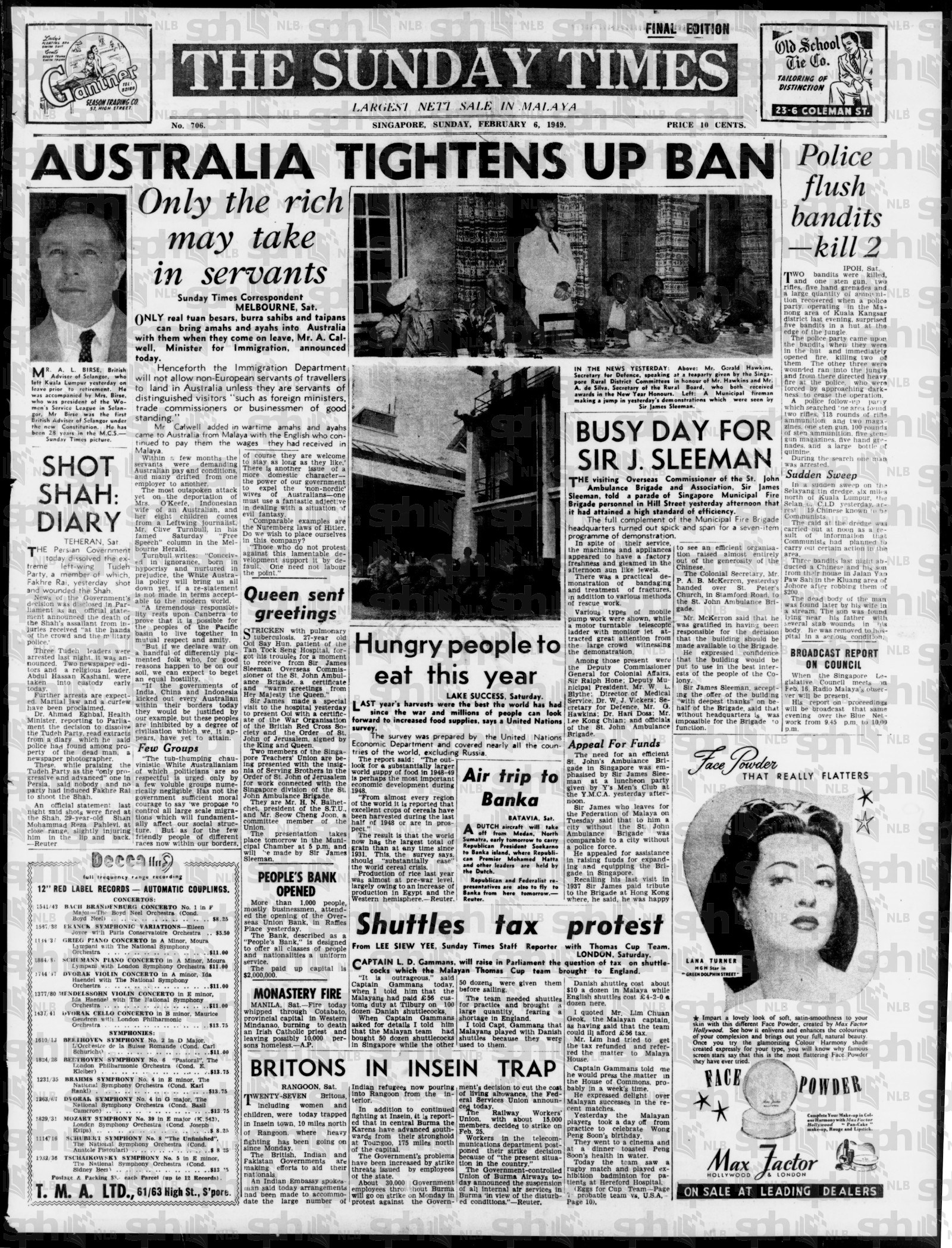
The front page of The Sunday Times, 6 February 1949. “People’s Bank Opened,” lower left, reports that more than 1,000 people, mostly businessmen, attended the bank’s opening the day before. (Singapore Press Holdings, via NewspaperSG, National Library Board Singapore, public domain)
Meyer Chambers, 1930
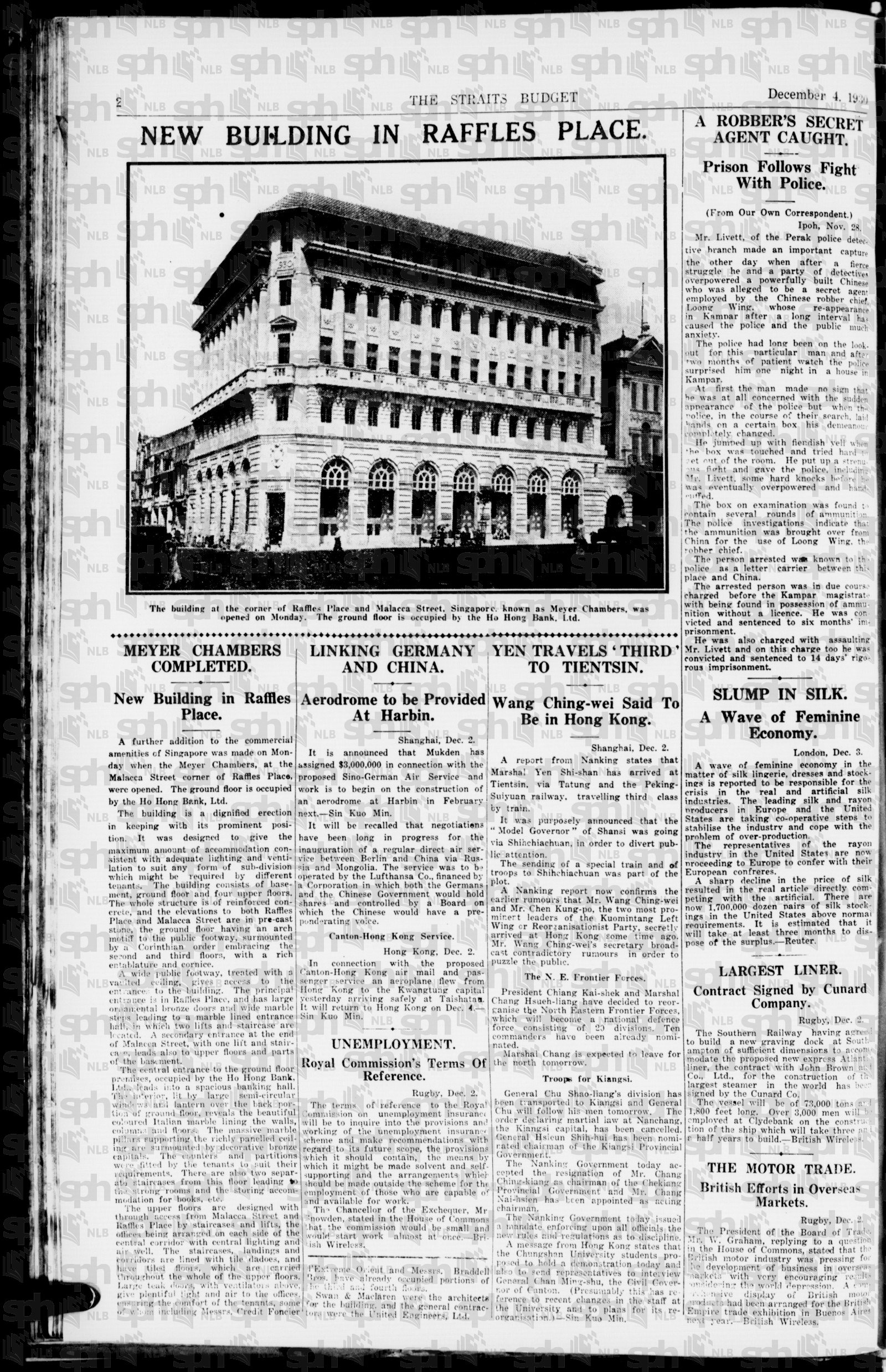
Page 2 of The Straits Budget, 4 December 1930: “New Building in Raffles Place,” with a photograph of the newly completed Meyer Chambers, where the bank opened in 1949. (Singapore Press Holdings, via NewspaperSG, National Library Board Singapore, public domain)
Hong Kong in the 1920s

Connaught Road, Hong Kong, in the 1920s. Lien worked in Hong Kong for two years before sailing to Singapore in 1920. (Unknown photographer, public domain, via Wikimedia Commons)
Fremantle in wartime

Fremantle Harbour during the Second World War. The Gorgon arrived here from Singapore on 20 February 1942. (Unknown photographer, public domain, via Wikimedia Commons)
Chiang Kai-shek

Chiang Kai-shek in the 1940s. Lien met him in Chongqing and was appointed to the wartime political council. (Unknown photographer, public domain, via Wikimedia Commons)
Wartime Chongqing

Crowds in Chongqing cheer volunteers of the Youth Army during the war. (Unknown photographer, public domain, via Wikimedia Commons)
The walls of Chongqing

The old walls of Chongqing, from an American soldier’s album of the 1940s. (Unknown photographer, public domain, via Wikimedia Commons)
An exile office in Chongqing

The third office of the Korean Provisional Government in Chongqing, used from 1941 to 1945. The wartime capital was full of exiles from countries the Japanese had occupied, as Lien was. (Unknown photographer, public domain, via Wikimedia Commons)
The surrender, September 1945
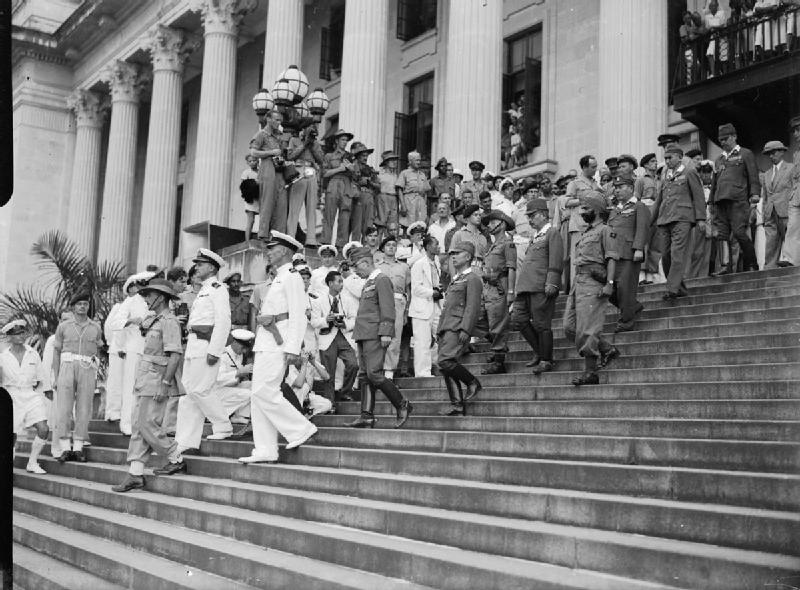
The Japanese delegation leaves the Municipal Building after the surrender ceremony in Singapore on 12 September 1945. Lien returned the following month. (Royal Navy official photographer, public domain, via Wikimedia Commons)
Aw Boon Haw

Aw Boon Haw, the maker of Tiger Balm, who sat on the bank’s first board. (Unknown photographer, public domain, via Wikimedia Commons)
Tan Lark Sye

Tan Lark Sye, the rubber magnate, another of the first directors, in 1950. (Singapore Press Holdings, public domain, via Wikimedia Commons)
Loke Wan Tho

Loke Wan Tho, the cinema owner, also on the first board, in 1947. (Loke Wan Tho, public domain, via Wikimedia Commons)
The view from the Mandarin

Singapore from the rooftop restaurant of the Mandarin hotel in 1973 or 1974. (Rainer Halama, CC BY-SA 4.0, via Wikimedia Commons)
The Chinese Chamber of Commerce

The Singapore Chinese Chamber of Commerce and Industry building on Hill Street in 2006. Lien became the Chamber’s youngest president in 1941. (Sengkang, copyrighted free use, via Wikimedia Commons)
The Mandarin today

The hotel as Mandarin Orchard in 2014. It has since been renamed the Hilton Singapore Orchard. (Jnzl’s Photos, CC BY 2.0, via Wikimedia Commons)
← Back to “Lien Ying Chow, the Banker Who Escaped to Chongqing”