More Photos: The Great Depression and Singapore's Crises
More images of the crash of 1929, the rubber and tin trades it hit, and the port and city that later crises reached.
Wall Street, 24 October 1929

Crowds outside the New York Stock Exchange on 24 October 1929, as the crash began. (Associated Press, public domain, via Wikimedia Commons)
Wall Street, 29 October 1929
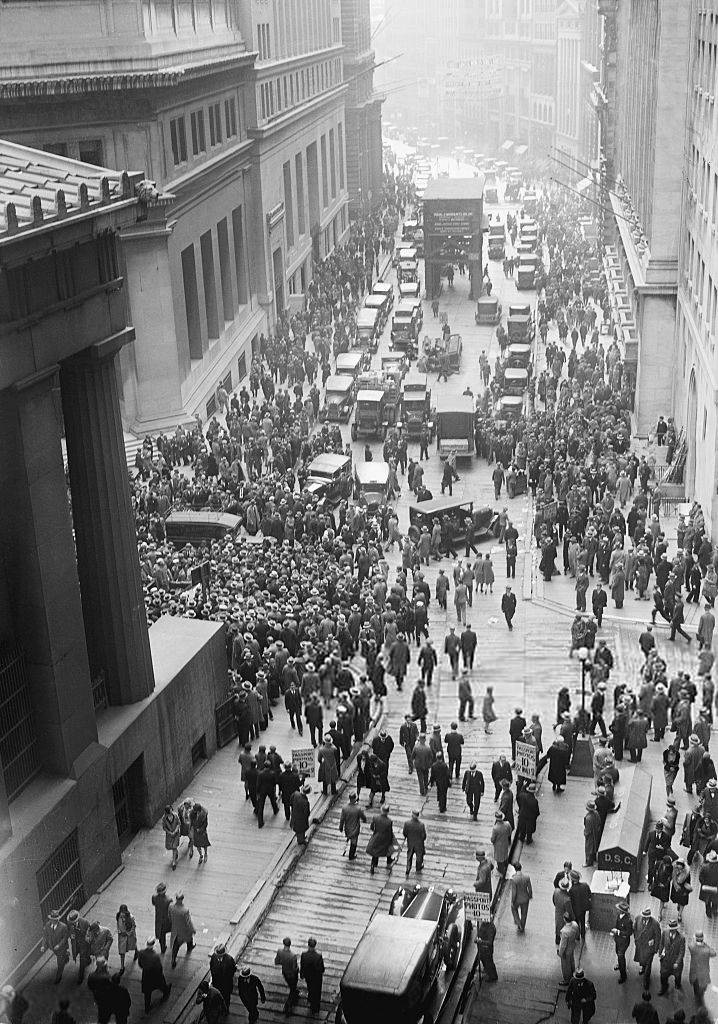
Wall Street on 29 October 1929, “Black Tuesday.” (United States government, public domain, via Wikimedia Commons)
Free passages to China, 1932
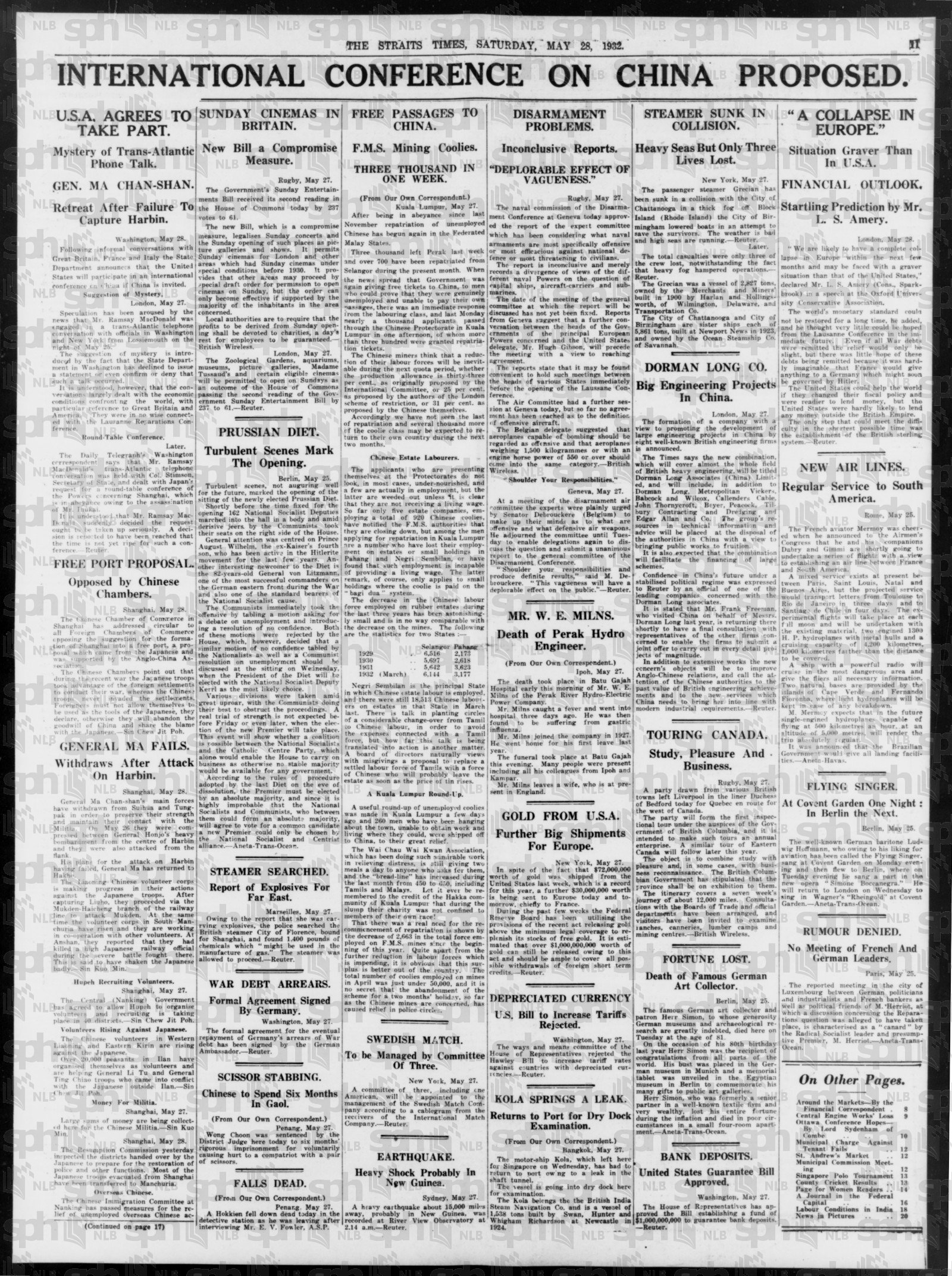
Page 11 of The Straits Times, 28 May 1932. “Free Passages to China,” in the third column, reports that three thousand unemployed Chinese miners had left Perak in a single week. (Singapore Press Holdings, via NewspaperSG, National Library Board Singapore, public domain)
The tin works on Pulau Brani

The tin industry on Pulau Brani around 1910. (C. J. Kleingrothe, KITLV 79928, public domain, via Wikimedia Commons)
Tapping rubber, on a stamp

A six-cent Federation of Malaya stamp of 1961 showing rubber tappers. Rubber was still Malaya’s largest export three decades after the Depression. (Malayan government, public domain, via Wikimedia Commons)
The financial district in 2001

UOB Plaza, the OUB Centre and the OCBC Centre on 8 June 2001, the year of the dot-com recession. (Steven Byles, CC BY-SA 2.0, via Wikimedia Commons)
The port

A container terminal in Singapore in 2014. The goods route into a crisis runs through here. (KimonBerlin, CC BY-SA 2.0, via Wikimedia Commons)
Tanjong Pagar terminal, 2019

The Tanjong Pagar container terminal in 2019. (Dietmar Rabich, CC BY-SA 4.0, via Wikimedia Commons)
The money route

The Marina Bay Financial Centre in 2016. A large financial sector is one reason Singapore is less dependent on electronics than in 2000, and one route by which a financial crisis can arrive. (Marcin Konsek, CC BY-SA 4.0, via Wikimedia Commons)