More Historical Photos: The Fall of Singapore
Seventeen more images from the story that played out above and around the Battlebox — the hill across six centuries of legend and empire, the room where the decision itself was made, the commanders on both sides of the table, the day that decision became public, and what came after.
Long before the war: the legend that named the hill

A garden on Fort Canning Hill commemorating Sang Nila Utama, the legendary Sumatran prince said to have founded Singapore here in the 14th century — the hill was known as Bukit Larangan, “Forbidden Hill,” long before it became a British command post. (Photo: ScribblingGeek / Wikimedia Commons, CC BY-SA 4.0)
The earliest known drawing of Singapore

The earliest known drawing of the settlement, sketched from the sea on 5 June 1823 — Raffles’s residence is visible on the hill, beside a flagpole, less than four years after his landing. (Photo: Philip Jackson / Wikimedia Commons, public domain)
The hill in 1825, when it was still a signal station

A British survey map of Singapore from 1825, just six years after Raffles’s landing, marking the hill’s “Flag Staff” — the signal station that gave Fort Canning Hill its earlier name, Bukit Larangan. (British Library India Office Records, via Wikimedia Commons, public domain)
The flagstaff that watched over the harbour

Fort Canning Hill viewed from the Singapore River sometime between 1860 and 1900, its signal mast still visible above the trees. (The National Archives, UK / Wikimedia Commons, public domain)
Fort Canning Hill before the war

Fort Canning Hill, photographed around 1902 — decades before the Malaya Command headquarters and its underground bunker were built into the hillside. (Photo: Aldwin Teo / Wikimedia Commons, CC BY-SA)
What’s left of the hill’s earlier residents

Headstones from the 1820s to 1860s lining the wall of the Old Christian Cemetery, relocated here when the hill was cleared for military use — long before the Battlebox was ever dug into it. (Photo: Wombatjpw / Wikimedia Commons, CC BY-SA 4.0)
The room where the decision was made

A life-sized reconstruction of the war council meeting inside the Battlebox, recreating the tense final conference before Percival ordered the surrender. (Photo: jokertrekker / Wikimedia Commons, CC BY 3.0)
Inside the command room

Reconstructed figures inside the Battlebox today, surrounded by wartime maps, an old telephone, and papers on the desk — part of the museum’s recreation of the final days before the surrender. (Photo: Michael Coghlan / Wikimedia Commons, CC BY-SA 2.0)
The signals room

One of the Battlebox’s reconstructed rooms, lined with communication booths and wartime memorabilia. (Photo: Bryn Pinzgauer / Wikimedia Commons, CC BY 2.0)
General Percival arrives in Singapore

Lieutenant-General Arthur Percival on his arrival in Singapore as General Officer Commanding Malaya, 13 August 1941 — six months before he would order the surrender from the bunker beneath Fort Canning Hill. (Photo: Imperial War Museums / Wikimedia Commons, public domain)
The garrison’s positions, days before the end

An official British military map showing troop positions across Singapore Island in February 1942 — the kind of map that would have hung on the Battlebox’s walls as the situation collapsed. (Photo: Her Majesty’s Stationery Office / Wikimedia Commons, public domain)
Percival meets the press, weeks before the end

Lieutenant-General Percival (second from right) with war correspondents in Singapore, late January 1942 — shortly before the capitulation. (Photo: Lt. Palmer / Wikimedia Commons, public domain)
General Yamashita, on the other side of the table

General Tomoyuki Yamashita, commander of the Japanese 25th Army, in 1942. It was Yamashita who demanded Percival’s unconditional surrender at the Ford Factory on Bukit Timah. (Photo: Wikimedia Commons, public domain)
The general above Yamashita
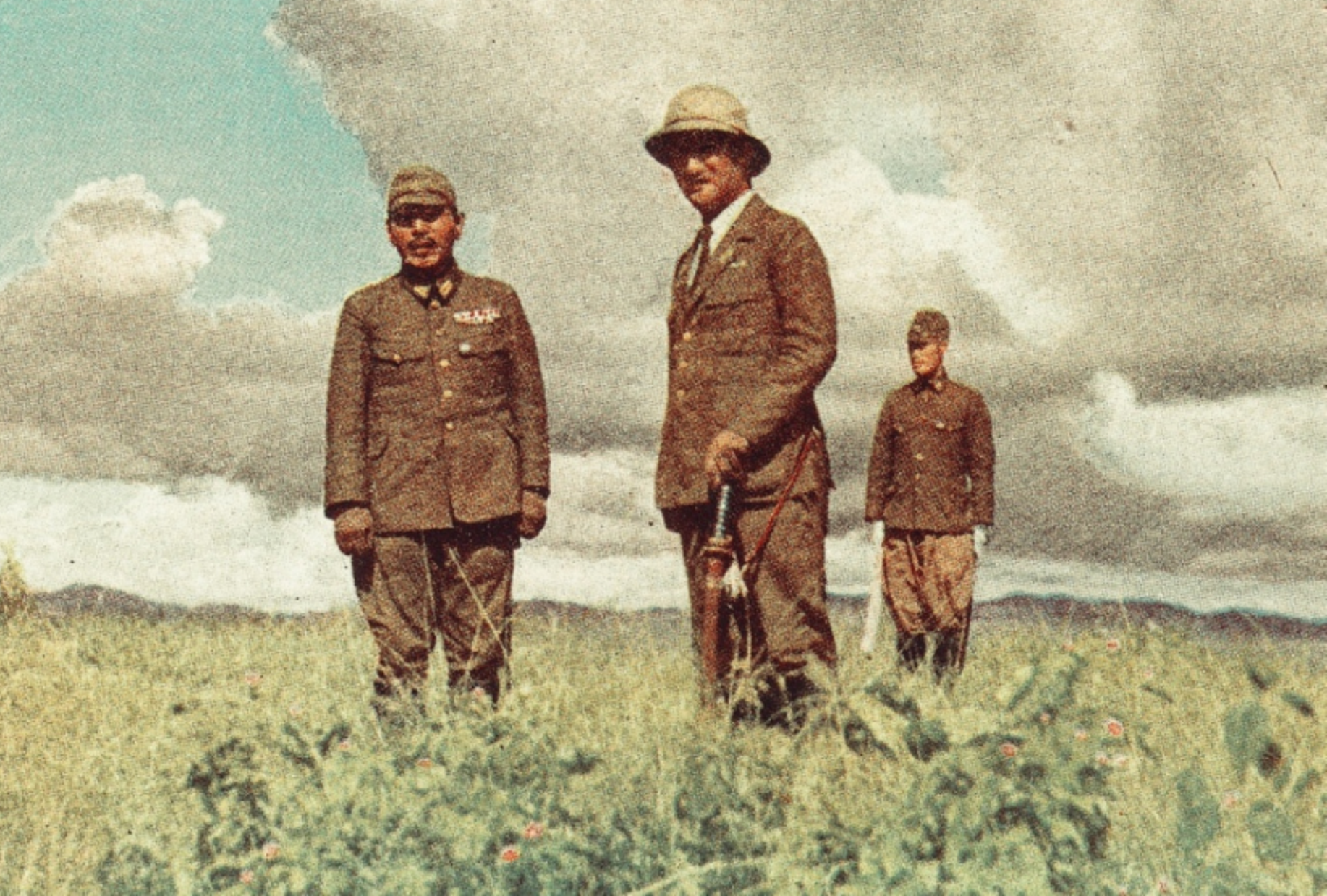
General Count Terauchi Hisaichi, commander of the Japanese Southern Expeditionary Army Group and Yamashita’s superior, in Singapore, 1942. (Photo: Japanese Press / Wikimedia Commons, public domain)
British troops surrender, 15 February 1942

British troops surrender to Japanese forces in Singapore, 15 February 1942 — the day the decision reached inside the Battlebox became public. (Photo: Australian War Memorial / Wikimedia Commons, public domain)
Walking out under a flag of truce
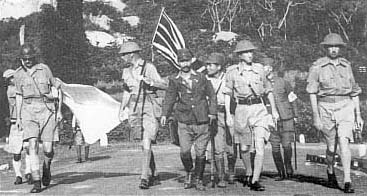
Lieutenant-General Percival’s party marches under a flag of truce to negotiate the surrender of Singapore, 15 February 1942 — the walk that followed the decision made in the bunker beneath Fort Canning Hill. (Photo: UK Government / Wikimedia Commons, public domain)
What came after

Former British prisoners of war, recently liberated from captivity in Sumatra, in Singapore in 1945 — one holding a newspaper announcing the atomic bomb. (Photo: Oliver Zina, Imperial War Museums / Wikimedia Commons, public domain)